Last updated October 30, 2026
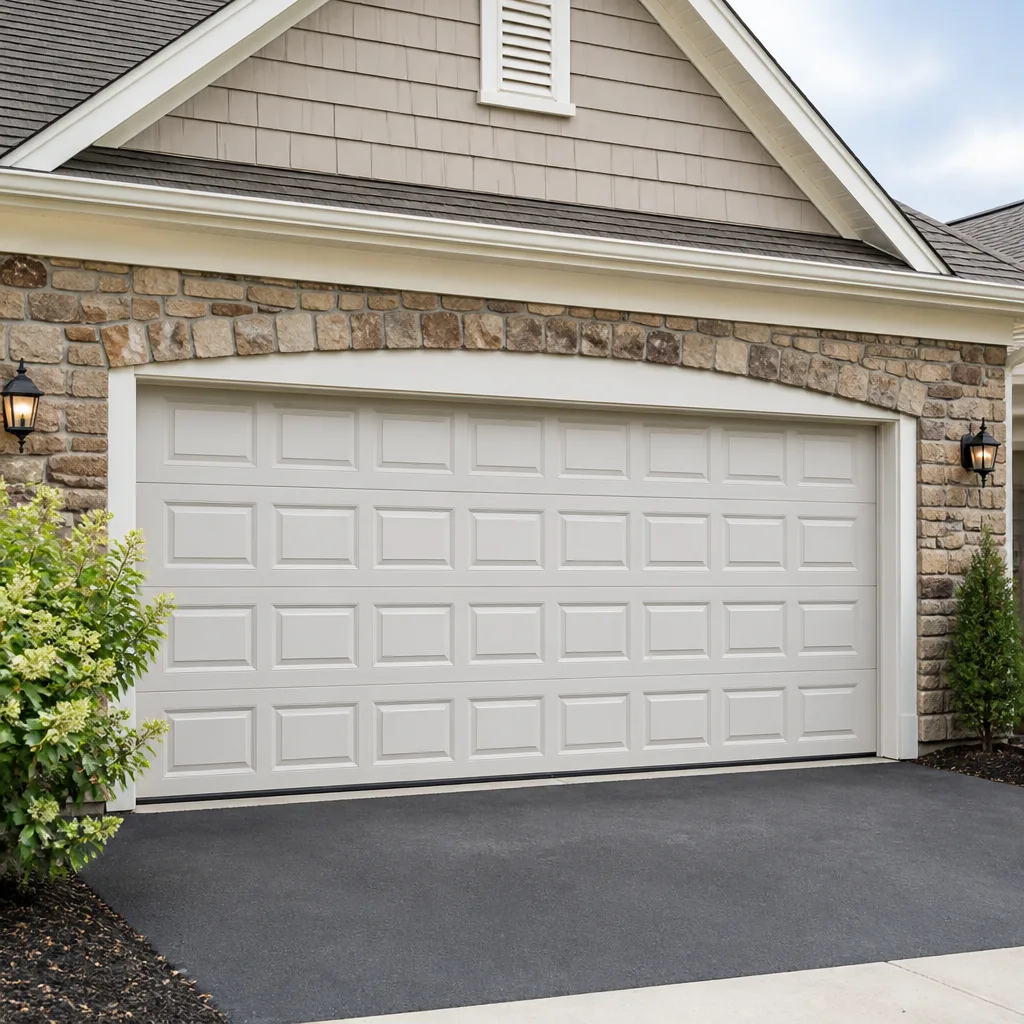 Raised-panel steel
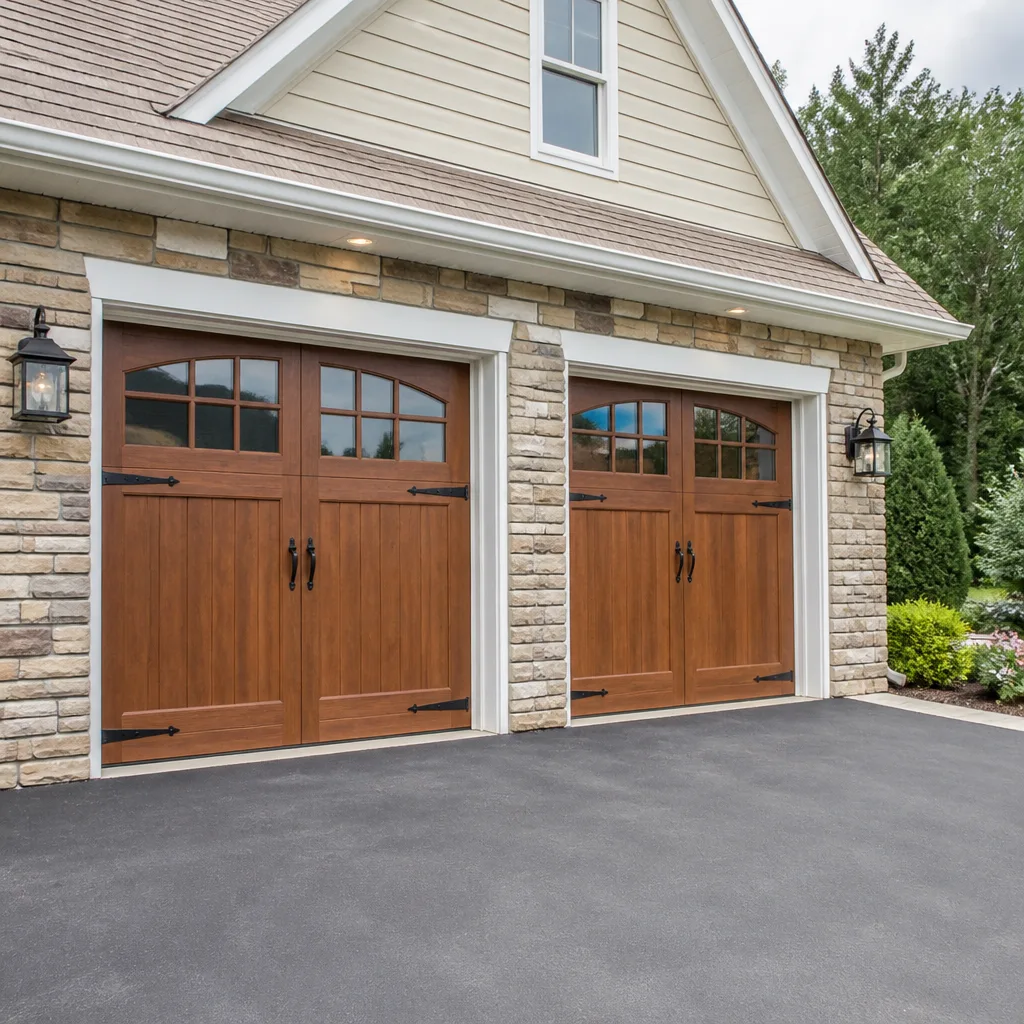 Carriage house
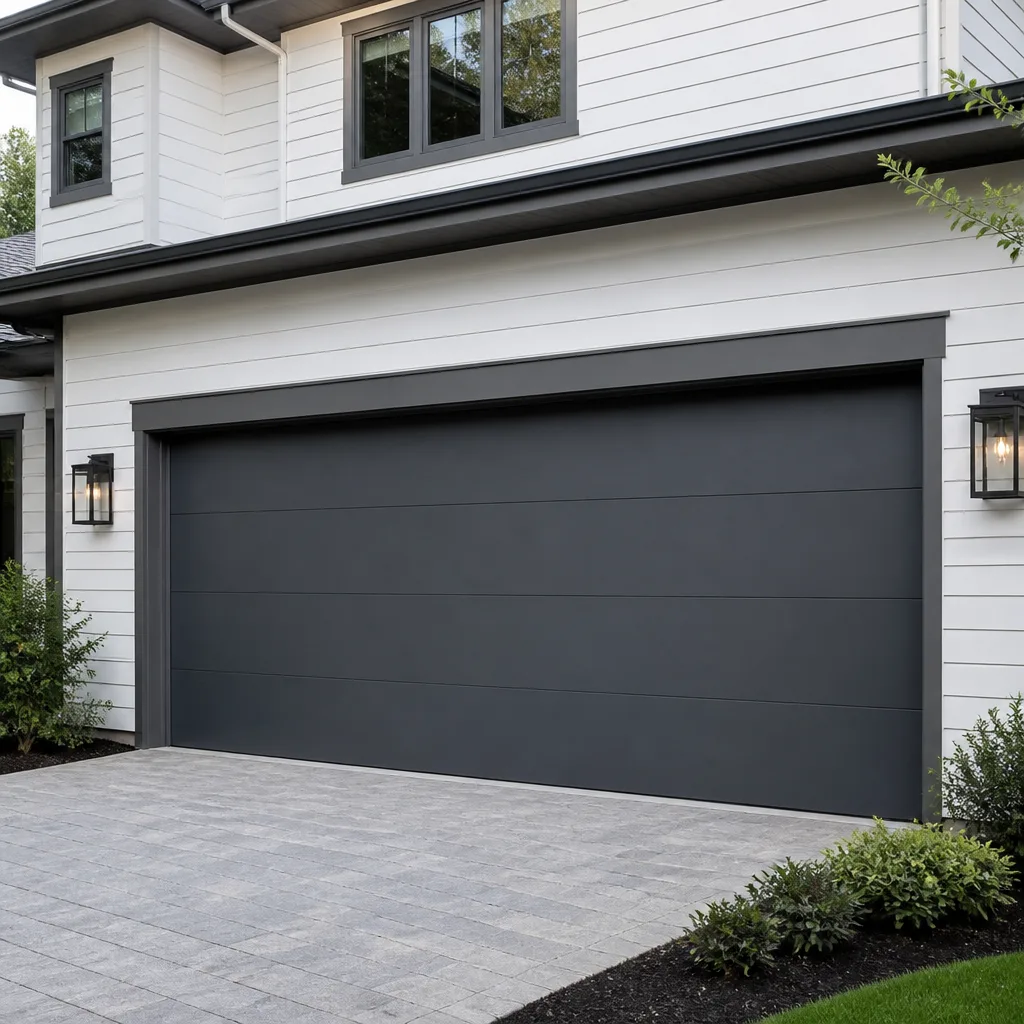 Modern flush
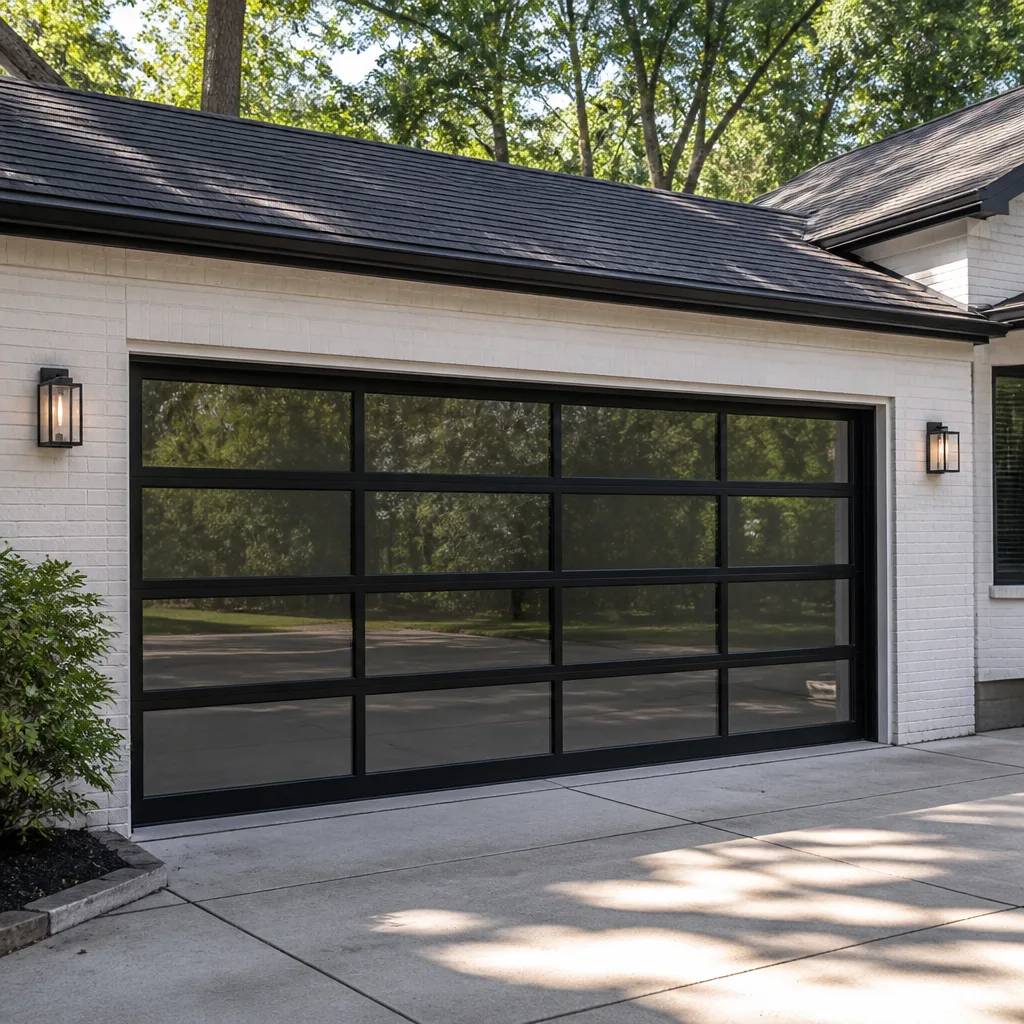 Full-view glass
 LiftMaster openers
 Chamberlain openers
Full 25-point door and opener safety check with every visit - springs, cables, rollers, tracks, and your LiftMaster or Chamberlain opener included
You get a price before we start. It does not change when the truck arrives.
Get your free estimateDIY vs Professional Garage Door: The Santa Ana Homeowner’s Decision Guide
A garage door is the heaviest moving object in your home. The average two-car door weighs between 250 and 400 pounds, and the torsion spring above it stores roughly the same amount of energy as a small pickup truck moving at 15 miles per hour. When that spring snaps, it doesn’t just break. It releases that energy in a fraction of a second, and if you’re standing in the wrong place, the wrong place is wherever the winding cone happens to be pointing. This guide from the team at Santa Ana Garage Door Service home explains what makes sense to tackle yourself, what doesn’t, and how to tell the difference before you spend money or end up in an urgent care clinic in Santa Ana.
Quick Answer
Most garage door maintenance tasks are genuinely safe and reasonable for a Santa Ana homeowner to handle solo: weatherstripping replacement, sensor alignment, track lubrication, and remote programming. The line you should never cross is the spring system. Torsion springs, extension springs, and any cable that runs through either one are not DIY territory, full stop. The cost difference between doing a spring job yourself and hiring a professional is measured in hundreds of dollars, but the risk differential is measured in hospital visits. If your problem is with the door’s moving parts and not the spring assembly, DIY is likely fine. If the spring is involved, call Garage Door Repair in Santa Ana and let someone who does this every day handle it.
Styles & brands we work with
Table of Contents
- What Actually Breaks on a Santa Ana Garage Door
- The DIY-Safe List: What You Can Handle This Weekend
- The Never-DIY List: Where Physics Wins Every Time
- The Physics of a Spring Failure, Explained Plainly
- The Real Cost Comparison: DIY vs Professional in Santa Ana
- The Middle Path: Prepare for a Pro Visit Without Touching Danger
- Why Your Door Brand Matters More Than You Think
- Common Mistakes to Avoid
- When to Call a Professional
What Actually Breaks on a Santa Ana Garage Door
Before you can decide whether to fix something yourself, you need to know what’s actually broken. In our experience working on doors across Santa Ana, the failure distribution looks roughly like this: springs account for about 40% of all repair calls. Cables and tracks account for another 25%. Openers, including motors, circuit boards, and drive mechanisms, account for 20%. The remaining 15% is weatherstripping, rollers, sensors, and cosmetic issues. The interesting part is that the least dangerous failures are the most common ones homeowners attempt to fix, while the most dangerous ones are often misdiagnosed until a professional gets eyes on the door.
Santa Ana’s climate plays a role here too. The combination of coastal moisture and summer heat cycles means springs rust and fatigue faster than they would in a dry inland climate. That doesn’t change what’s safe to fix, but it explains why the spring failure rate in Orange County is higher than you’d expect from a door that looks fine from the outside.
Signs You Can Diagnose Yourself (Safely)
- Door doesn’t open or close fully: Check for objects blocking the photo eyes at the bottom of either track. The small LED light on each sensor should be solid. If one blinks, that’s your problem.
- Door opens but doesn’t close: The safety reversal mechanism may be triggered. Check that the photo eye lenses aren’t dirty and that the sensors haven’t been knocked out of alignment.
- Door is loud: Grinding, squeaking, or rattling often means dry rollers or hinges. This is usually a lubrication issue, not a structural one.
- Door is slow: If the opener motor runs but the door moves slowly, check for debris in the tracks or dry rollers that need lubricant.
- Remote doesn’t work: The opener itself may be fine. Batteries, signal interference, and lost programming are the usual culprits.
The DIY-Safe List: What You Can Handle This Weekend
There’s a genuinely legitimate set of garage door tasks that don’t require professional training, don’t involve stored energy, and don’t put you in harm’s way. These are the jobs where DIY makes sense, and spending money on a service call for them isn’t necessary. Here’s the complete list of what a competent Santa Ana homeowner can safely handle without second-guessing the decision.
- Weatherstripping replacement: The rubber seal along the bottom of your door and the vinyl trim around the sides degrade after 3 to 5 years of Santa Ana sun exposure. Replacement is a matter of pulling out the old material and sliding in the new. Cost: $20 to $60 in materials. Time: 45 minutes. Tool requirement: utility knife and a flathead screwdriver.
- Lubrication: Metal rollers, hinges, and the opener rail need a silicone-based or lithium-based lubricant every 6 to 12 months. Use a spray with a straw nozzle, apply it to the roller bearings and hinge pins, and wipe away excess. Never use WD-40, which is a degreaser and will strip the existing lubricant. Cost: $10 to $15 for a can that lasts a year. Time: 20 minutes.
- Sensor alignment: If the door opens but won’t close, the photo eyes are misaligned. Loosen the wing nut that holds each sensor in place, adjust the sensor so the small LED light turns solid, and retighten. Cost: free. Time: 10 minutes.
- Remote programming: Reprogramming a garage door opener remote is a button-press sequence that varies by manufacturer. The opener’s manual is available online, and the process takes under 3 minutes. This applies to most major brands including LiftMaster, Chamberlain, Genie, and Craftsman. Cost: free. Time: under 5 minutes.
- Panel cosmetic repair: Dents in aluminum panels can sometimes be worked out with a rubber mallet or a plunger. Wood panel scratches can be sanded and refinished. None of this affects the door’s mechanical function. Cost: $0 to $30. Time: varies.
- Battery replacement: Dead batteries in remotes and keypads are the single most common reason a door won’t respond to a command. This takes 60 seconds and a screwdriver.
The common thread here is that none of these tasks involve components under tension. None of them require you to remove a cable, unwind a spring, or place your hands near anything that stores energy. The moment you’re considering a repair that involves those things, you’re no longer in the DIY territory, and the way to tell is simple: if the part you’re looking at is connected to a spring or cable, that’s the exit point.
The Never-DIY List: Where Physics Wins Every Time
This section does not have nuance. These are not “be careful” tasks. These are “do not do this” tasks. The dividing line is not your skill level, your confidence, or your YouTube viewing history. The dividing line is the amount of stored energy in the component you’re about to touch.
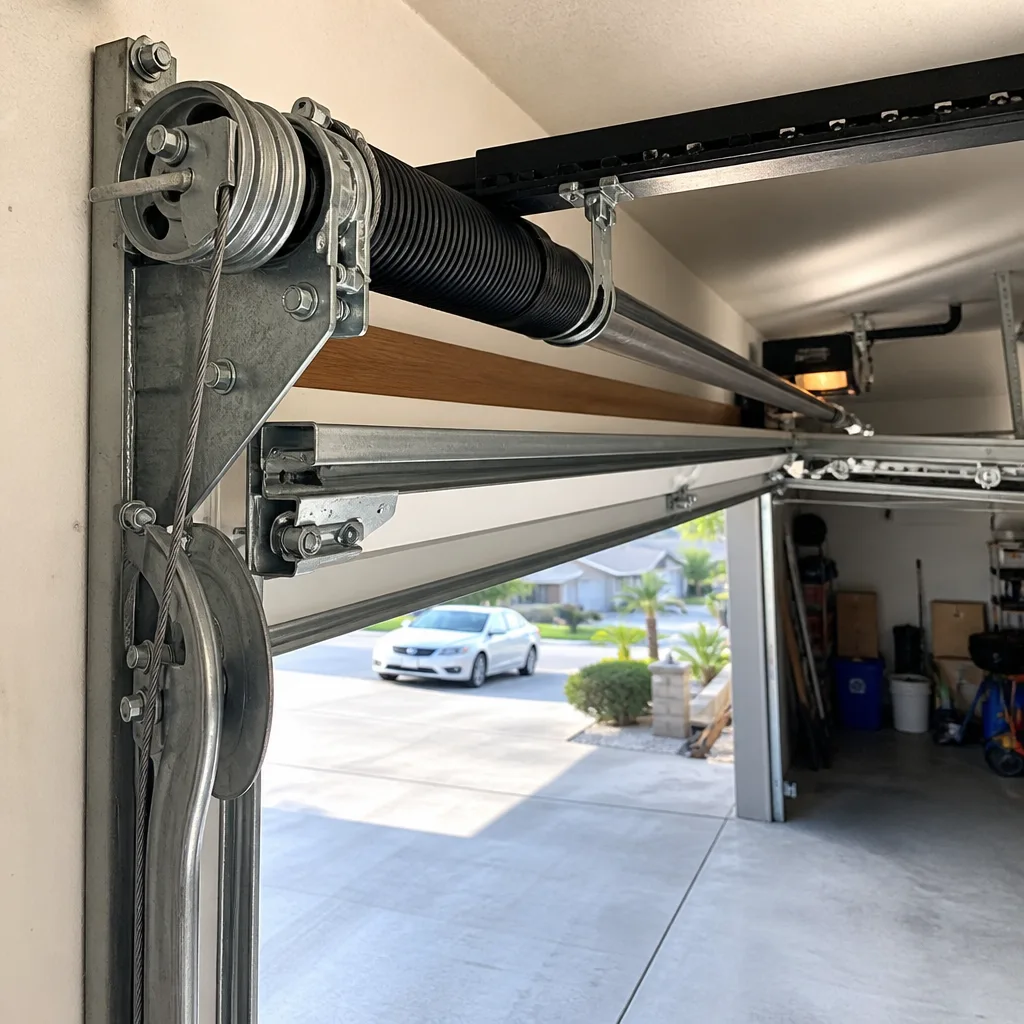
- Torsion spring replacement: Torsion springs are the long coiled springs mounted horizontally above the door opening. They are wound under extreme tension, and winding or unwinding them requires specialized bars, specific procedural knowledge, and a healthy respect for what happens when a bar slips. This is the single most dangerous residential door component in existence.
- Extension spring replacement: Extension springs are the long springs that run along the horizontal tracks on either side of the door. They stretch when the door closes and contract when it opens. When they snap, the broken ends become projectiles. Safety cables (which many older Santa Ana homes don’t have) are the only thing that prevents a snapped spring from hitting whatever is in its path, including you.
- Cable replacement: The lifting cables run through the spring system and bear the full weight of the door when it opens and closes. If a cable has snapped, the door is now unbalanced, and the remaining tension is unpredictable. Replacing a cable requires releasing the tension on the spring first. That’s a professional job by definition.
- Track realignment under load: Tracks carry the door’s full weight through every open and close cycle. If a track has shifted enough to derail the door, the door is hanging incorrectly, and adjusting the track while the door is still on it is a recipe for a 300-pound surprise. A professional supports the door first, then adjusts the track.
- Opener circuit board repair: Modern openers contain circuit boards that interface with safety sensors, wall controls, and smart home systems. Troubleshooting a failed board involves working with 120-volt wiring and components that are not field-serviceable. If the motor runs but the logic board is fried, the board needs replacement, not repair.
- Any repair that requires you to remove the spring tension: If your diagnosis path leads you to a step that says “release the tension,” that step is the line. Stop there. Call (855) 341-7810. Every professional technician has stories about a homeowner who got 95% through a DIY spring job before the last turn went wrong. The last turn is the dangerous one, because that’s when the spring is under maximum load.
The Physics of a Spring Failure, Explained Plainly
Here’s what actually happens when a torsion spring breaks, and why proximity matters more than most people understand. A torsion spring is a hardened steel coil that’s wound to counterbalance the weight of the door. A typical residential torsion spring is wound to between 7 and 8 turns. Each turn stores energy. When the spring is fully wound, the total stored energy is the equivalent of a 20-pound weight dropped from about 10 feet, focused onto a single winding cone.
When a spring breaks, it doesn’t fail slowly. The metal fractures in a split second, and that energy is released as rotational force. The winding cone, which is the cast metal fitting at the end of the spring, can spin at extremely high velocity. If your wrench, your hand, or your face is in the path of that cone when it releases, the damage is done before you can react. Reaction time is measured in milliseconds. This is not a “be careful” problem. This is a “don’t be there” problem.
Extension springs present a different but equally serious risk. When an extension spring breaks, the released energy is linear rather than rotational. The broken end shoots across the garage with enough force to crack a windshield or fracture bone. Safety cables are designed to catch the broken end and keep it contained along the track, but older Santa Ana homes with original doors may not have them installed. We see this in the older neighborhoods like Floral Park and Washington Square, where door systems from the 1980s and 1990s are still in operation.
The failure rate itself follows a predictable curve. Springs are rated for a certain number of cycles (a cycle is one open and one close), and most residential springs are rated for 10,000 cycles. With average use of 4 to 5 cycles per day, that’s roughly 7 to 9 years of service. When a spring reaches the end of that life, the metal fatigues and fails. It’s not a random event. It’s closer to a scheduled event that no one schedules.
The Real Cost Comparison: DIY vs Professional in Santa Ana
Here’s the math that most “DIY vs professional” guides skip. They compare part cost to part cost, which is useful if you value your time at zero dollars an hour and assume everything goes right on the first attempt. It doesn’t always work that way.
Let’s price out a torsion spring replacement on a standard two-car door, which is the most common major repair we handle in Santa Ana:
- DIY part cost: A pair of torsion springs from a local supplier runs $55 to $80 for the pair. Add $20 to $40 for winding bars if you don’t have them (and most homeowners don’t). Total: $75 to $120.
- DIY time cost: A first-time spring replacement takes 3 to 5 hours, including watching instructional videos, making a trip to the supplier, and doing the work. If you value your time at $25 per hour (a conservative Santa Ana rate), that’s $75 to $125.
- DIY risk cost: This is the number nobody includes. If the winding bar slips, you’re looking at a trip to urgent care or the emergency room. Even with insurance, a typical copay for an ER visit in Orange County is $250 to $500, plus whatever follow-up care is needed. And that assumes you’re insured.
- Professional cost: Torsion spring replacement in Santa Ana typically runs $180 to $340, parts and labor included, for a standard two-car door. The job takes a technician 45 to 90 minutes. You’re not buying springs. You’re buying the training, the tools, the insurance, and the absence of risk to yourself.
The comparison changes when you look at genuinely DIY-safe tasks. Replacing weatherstripping yourself costs $20 to $60 and takes under an hour. Hiring a professional for weatherstripping replacement costs $125 to $200 because you’re paying for the service call, not just the material. For small jobs like that, DIY wins every time.
The principle is this: DIY wins when the part is cheap, the labor is simple, and the risk is zero. Professional wins when the part requires specialized tools, the labor requires procedural knowledge, or the risk of injury is non-zero. For torsion springs, all three professional advantages apply. That’s why the professional quote exists. Garage Door Repair in Santa Ana prices are quoted before work begins, and the price you’re quoted is the price you pay. No surprises after the spring is already replaced.
The Middle Path: Prepare for a Pro Visit Without Touching Danger
There’s a middle ground between full DIY and calling a technician for everything. A smart Santa Ana homeowner can reduce the time a professional spends on site by doing the safe preparatory work in advance. This shortens the visit, which can lower the billable hours, but it never puts you in the path of a loaded spring.
- Document the symptoms: Before you call, write down exactly what the door does and doesn’t do. Does it open but not close? Close but not open? Make noise? Stop halfway? The more specific your description, the faster a technician can diagnose the problem and the less time is spent on troubleshooting during the visit.
- Note the brand and model: Find the manufacturer label on the door (usually on the edge of a panel) and on the opener motor housing (usually on the side). LiftMaster, Chamberlain, Genie, Clopay, and every other major brand puts their name and model number there. Having this ready means the technician knows which parts to expect before arriving.
- Take photos: Take a photo of the spring assembly, the tracks, and the opener. A photo tells a technician more in 10 seconds than a verbal description does in 3 minutes.
- Clear the area: Move cars, bikes, boxes, and anything else out of the way before the technician arrives. A clutter-free work area speeds up the job. This is genuine prep work that takes you 10 minutes and saves the technician 20.
- Test the wall control: If the door responds to the wall button but not the remote, that rules out the motor and points to the remote, the receiver, or the programming. That one observation narrows the diagnosis significantly without you touching a single mechanical component.
- Lock the door open or closed (manually): If the door is stuck halfway, leave it where it is. Don’t try to force it into either position. If it’s already fully open or fully closed, leave it that way. Moving a door with a broken spring without proper support is how doors come off their tracks.
This preparation doesn’t require touching any component under tension, and it doesn’t put you at risk. What it does is give the professional useful information before they’re on the clock. That’s the version of DIY that makes sense.
Why Your Door Brand Matters More Than You Think
Santa Ana homes have a wide mix of garage door brands because the housing stock spans multiple decades. Homes built in the 1960s and 1970s may have original doors from brands that no longer exist. Homes built in the 1990s and 2000s likely have Clopay panels or Amarr steel doors. Openers run the same range: LiftMaster and Chamberlain dominate the modern installations, while Genie and Craftsman show up heavily in homes from the 2000s.
The reason brand matters is that repair procedures, part specifications, and troubleshooting steps vary by manufacturer. A LiftMaster opener uses different travel limits and force settings than a Genie. A Clopay torsion spring system uses different winding hardware than a Wayne Dalton. A technician who knows the brand before arriving can bring the right parts on the first trip instead of making a diagnostic visit, ordering parts, and returning a second time.
That’s the real argument for brand-specific knowledge. It’s not about brand loyalty. It’s about avoiding the extra visit and the extra day of a door that doesn’t work. Garage Door Opener Repair in Santa Ana works across the major brands, not just one, which means the diagnosis is based on what’s actually broken rather than what the service company is incentivized to sell.
Common Mistakes to Avoid
- Attempting a spring job with the wrong tools: Winding bars are not interchangeable with screwdrivers, pry bars, or rebar. Using anything other than the proper diameter bars is the number one cause of spring-related injuries. The bars have to fit the winding cone holes exactly, and they have to be held with a full grip at all times.
- Assuming a snapped cable is a standalone problem: Cables rarely fail by themselves. A snapped cable usually means a spring broke first and the door became unbalanced, which overloaded the remaining cable. Replacing only the cable without addressing the spring is a temporary fix at best. In Santa Ana, we see this pattern in doors that are 10 to 15 years old and have never had a spring replacement.
- Using WD-40 on rollers and hinges: WD-40 is a water displacer and degreaser. It strips lubricant rather than adding it. Use white lithium grease or a silicone-based spray on rollers and hinges. This mistake is so common that it’s one of the first things we check when a customer says a recent lubrication made the door louder.
- Adjusting the opener’s force settings to fix a heavy door: If the door is hard to lift manually, the problem is the spring or the rollers, not the opener. Increasing the opener force just masks the real issue and puts extra strain on the motor. The door should feel nearly weightless when the spring is doing its job.
- Ignoring a door that’s slightly unbalanced: A door that drifts up or down an inch or two after you release it isn’t a minor annoyance. It’s an early warning that a spring is losing tension. If you catch it early, a professional can make a small adjustment. If you ignore it, you’ll be replacing a spring that’s already snapped.
- Forcing a door that’s off its track back onto the track: This is a classic mistake. The door is heavy, the track is sharp, and the moment the door slips the weight transfers to whatever’s underneath it. The right move is to leave the door where it is and call a professional. Forcing it back on without addressing why it came off means it will come off again, possibly while you’re standing under it.
When to Call a Professional
If the problem involves a spring, a cable, a track that’s shifted, or an opener that won’t respond to any input, call a professional. If the door is off its tracks, hanging crooked, or making a sound like a gunshot when it moves, call a professional. If you’ve diagnosed the problem and the fix requires you to release tension from a spring, call a professional. The line is not subtle. The line is the spring system. Garage Door Repair in Santa Ana offers free estimates in Santa Ana: call (855) 341-7810 and a technician will give you a written price before any work begins.
See the difference
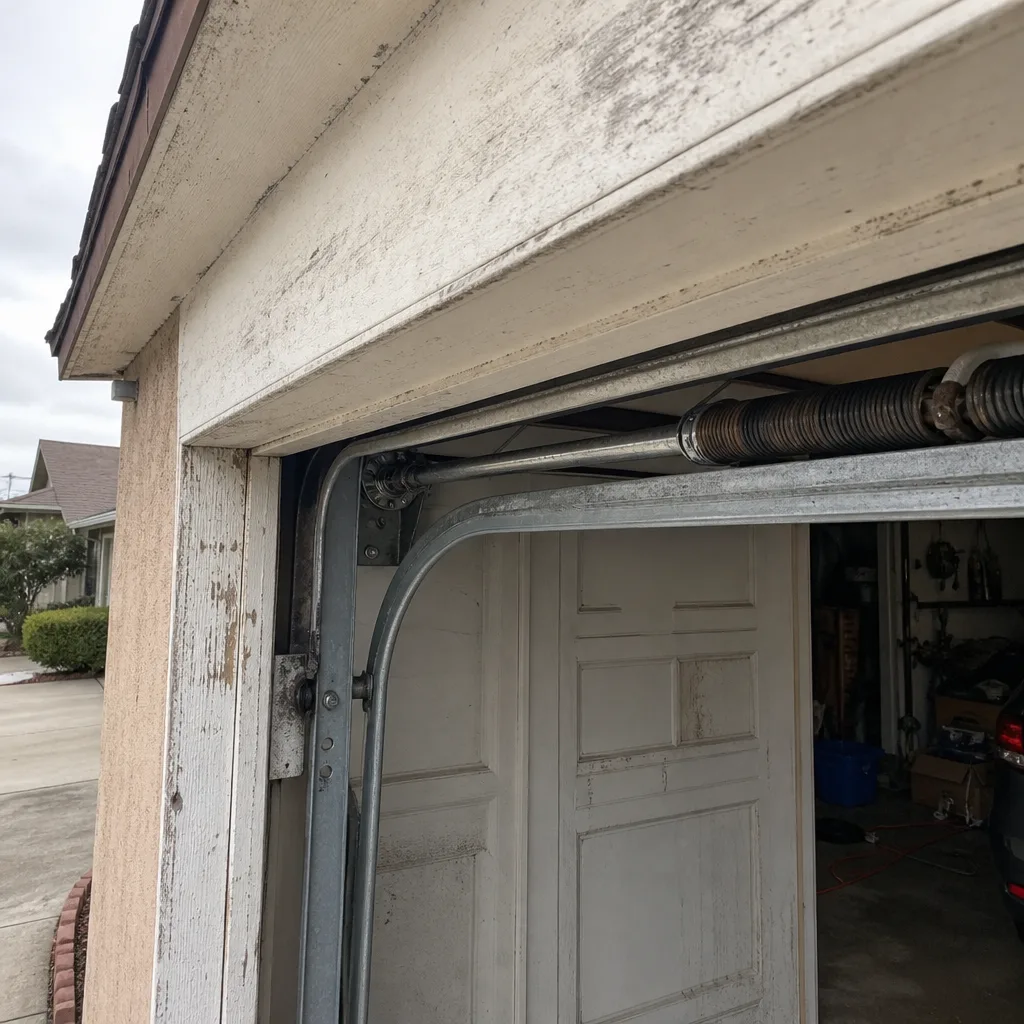 Before
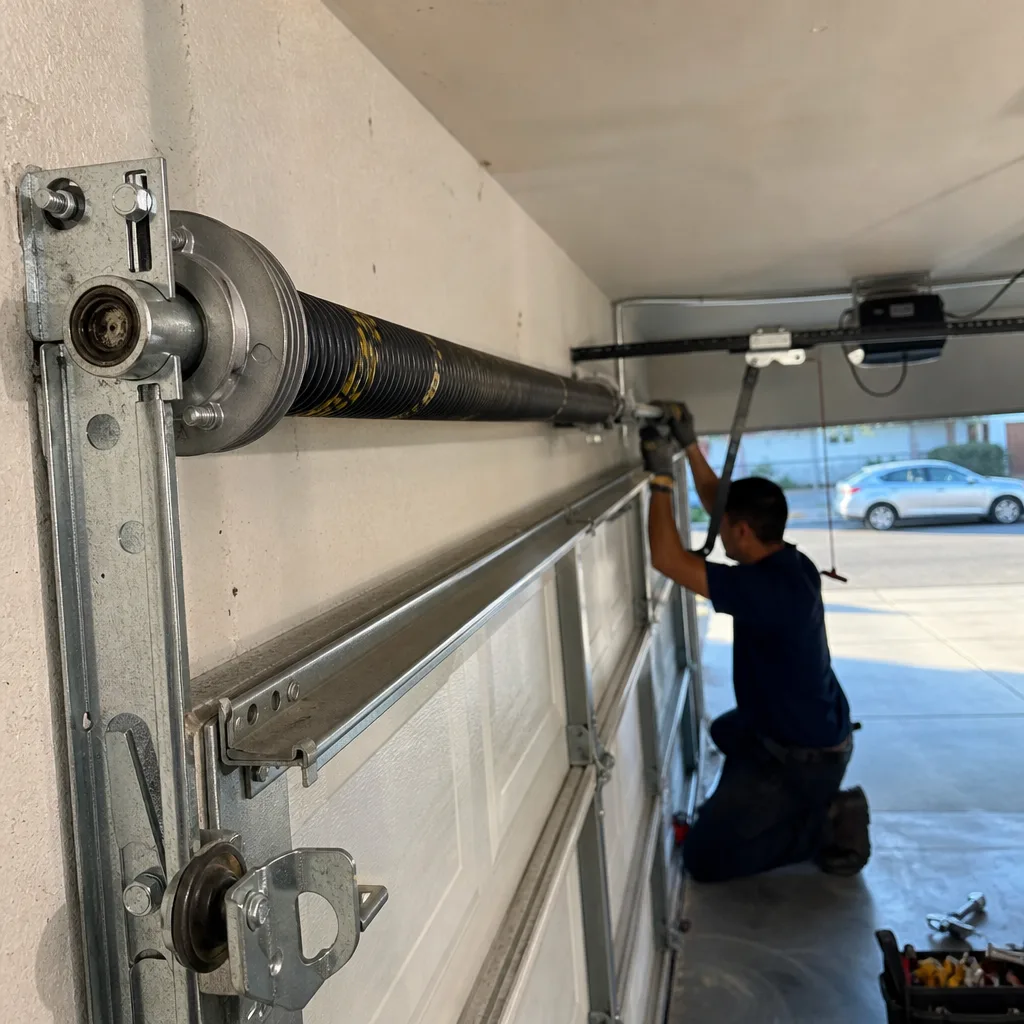 After
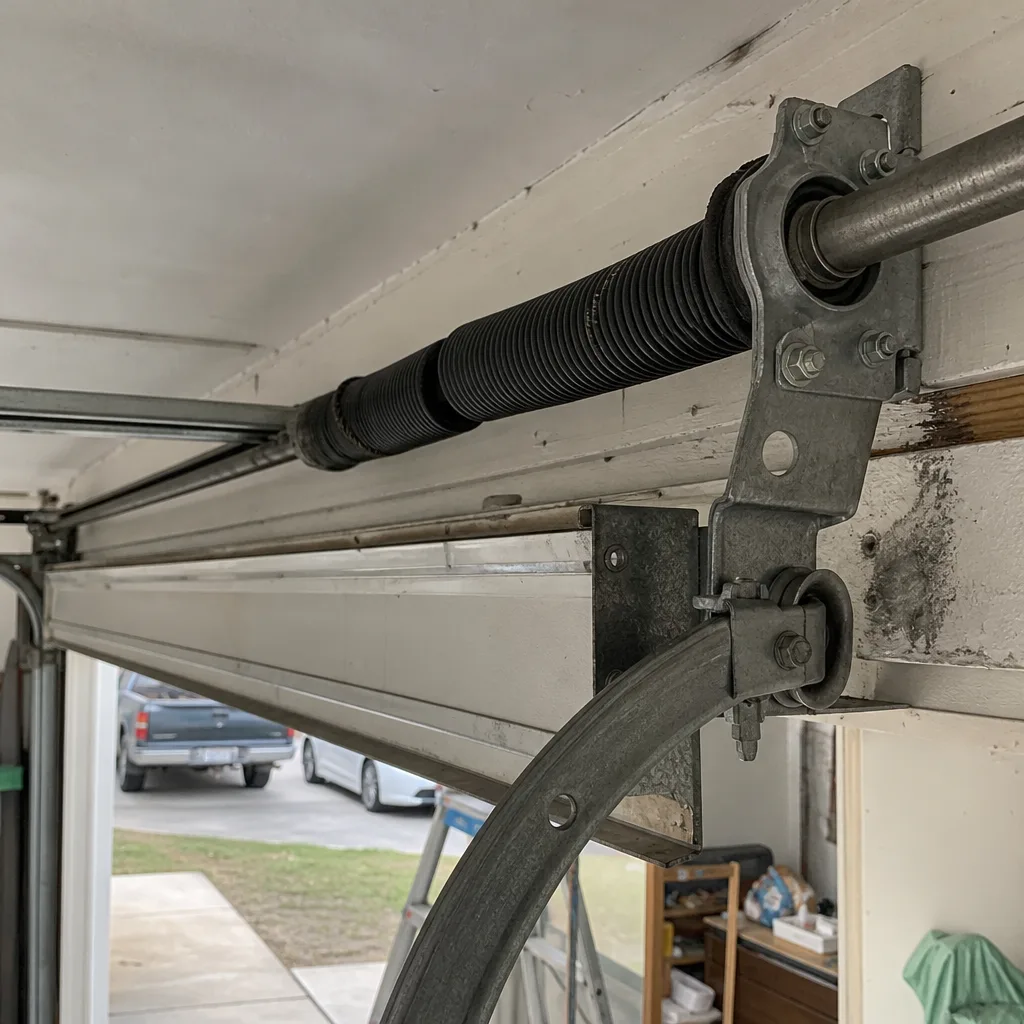 Before
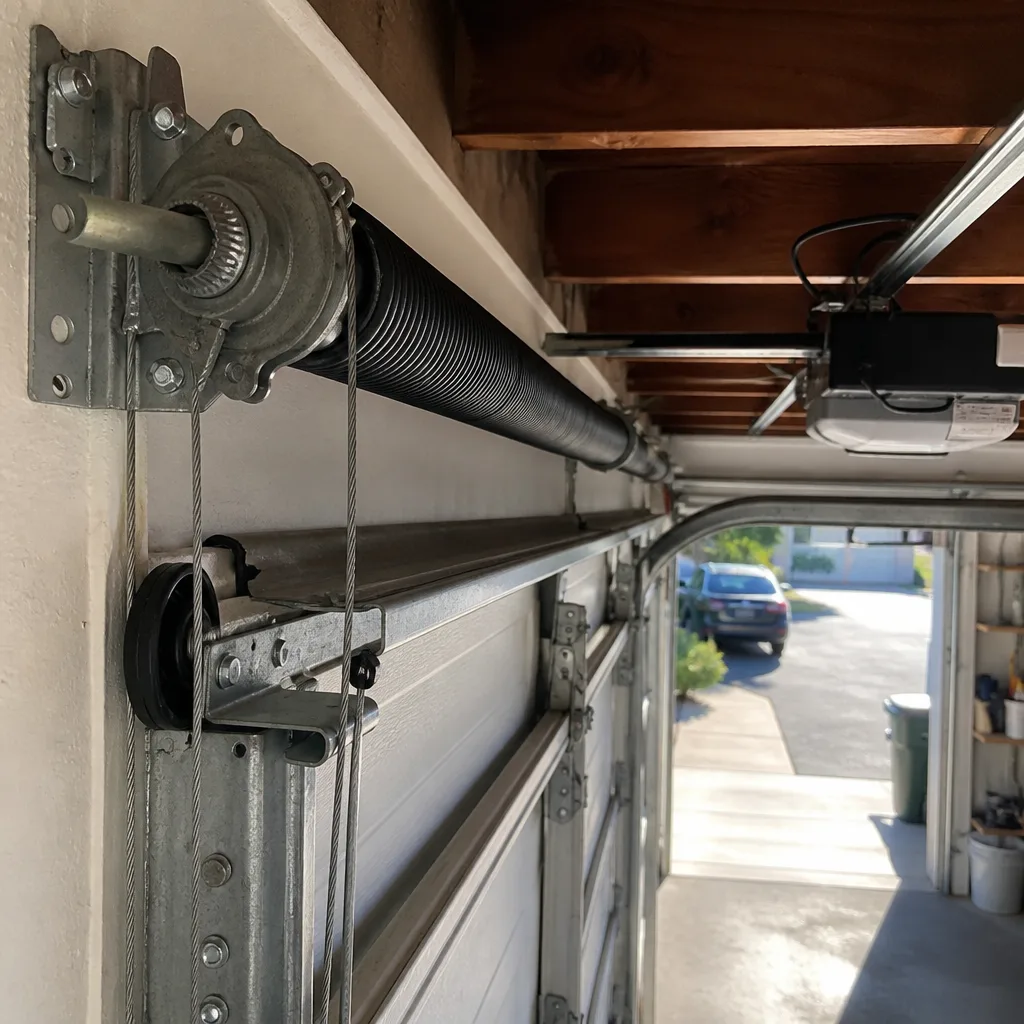 After
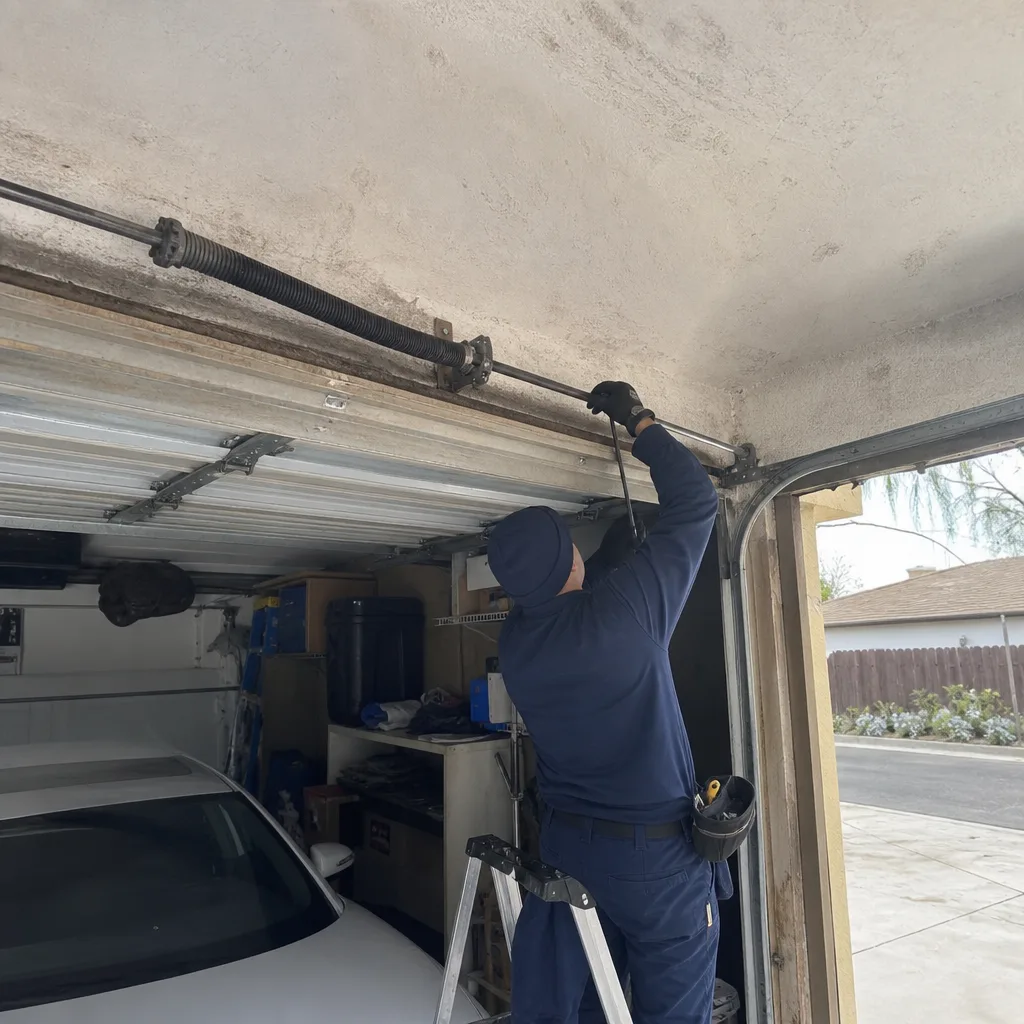 Before
 After
Frequently Asked Questions
No. Torsion springs and extension springs store enough energy to cause serious injury or death when they’re released unexpectedly. The tooling, procedural knowledge, and physical positioning required to replace a spring safely are not things a homeowner can learn from a video, and the cost of a professional replacement ($180 to $340 in Santa Ana) is far less than the cost of an emergency room visit. Call (855) 341-7810 for a free quote.
Weatherstripping replacement, lubrication, sensor alignment, remote reprogramming, cosmetic panel repair, and battery replacement are all genuinely DIY-safe. None of these involve components under tension. If the repair you’re considering involves a spring, cable, or anything connected to either, it is not DIY territory.
Repair costs in Santa Ana vary by the type of repair. Torsion spring replacement typically runs $180 to $340. Opener repair runs $100 to $250 depending on the issue. Weatherstripping replacement runs $125 to $200. Every job is quoted upfront before work starts. Call (855) 341-7810 for an exact number on your specific door.
If the door won’t open, the opener motor runs but the door doesn’t move, or you see a visible gap in the spring above the door (usually about 2 inches wide), the spring is broken. The sound of a spring breaking is often described as a loud bang or pop from inside the garage. If any of these symptoms match, don’t continue trying to operate the door.
Yes. Santa Ana’s combination of warm coastal air and dry summer heat accelerates metal fatigue on springs. The surface rust that forms on a spring absorbs moisture and weakens the steel over time, which shortens the service life of springs in Orange County compared to homes in drier inland climates with less temperature fluctuation.
Most residential torsion springs are rated for 10,000 cycles, which translates to roughly 7 to 9 years with typical Santa Ana usage. Homes where the door is used more frequently, or homes with older door systems that were originally equipped with lower-cycle springs, may see failures sooner. If your springs are approaching that age range and you notice the door drifting or feeling heavier, it’s time for an inspection. Estimate is free: call (855) 341-7810.
Yes. We service LiftMaster, Chamberlain, Genie, Clopay, Amarr, Wayne Dalton, Craftsman, and Raynor systems, across both the door hardware and the opener drive. Whatever brand is on your door, we already know it. Garage Door Installation in Santa Ana is also available if you’re replacing the entire system rather than repairing a component.
No. The price you’re quoted before work begins is the price you pay. If additional issues are found during the repair, a new price is quoted and approved by you before any additional work proceeds. This applies to every repair and installation we handle in Santa Ana.
The Bottom Line
The DIY vs professional question for garage doors isn’t about whether you’re handy. It’s about whether the component you’re touching stores energy. Weatherstripping, sensors, remotes, and lubrication are genuinely DIY-appropriate, and doing them yourself saves real money. Springs, cables, tracks, and opener internals are professional territory because the physics doesn’t care how careful you are. The smart play is to do the small stuff yourself, prepare thoroughly for the professional when you need one, and call before the small problems become dangerous ones. The estimate is free. The hospital visit isn’t. Call (855) 341-7810 and get a price before you decide.
Written by the team at Santa Ana Garage Door Service, serving Santa Ana since 2011.