Last updated October 31, 2026
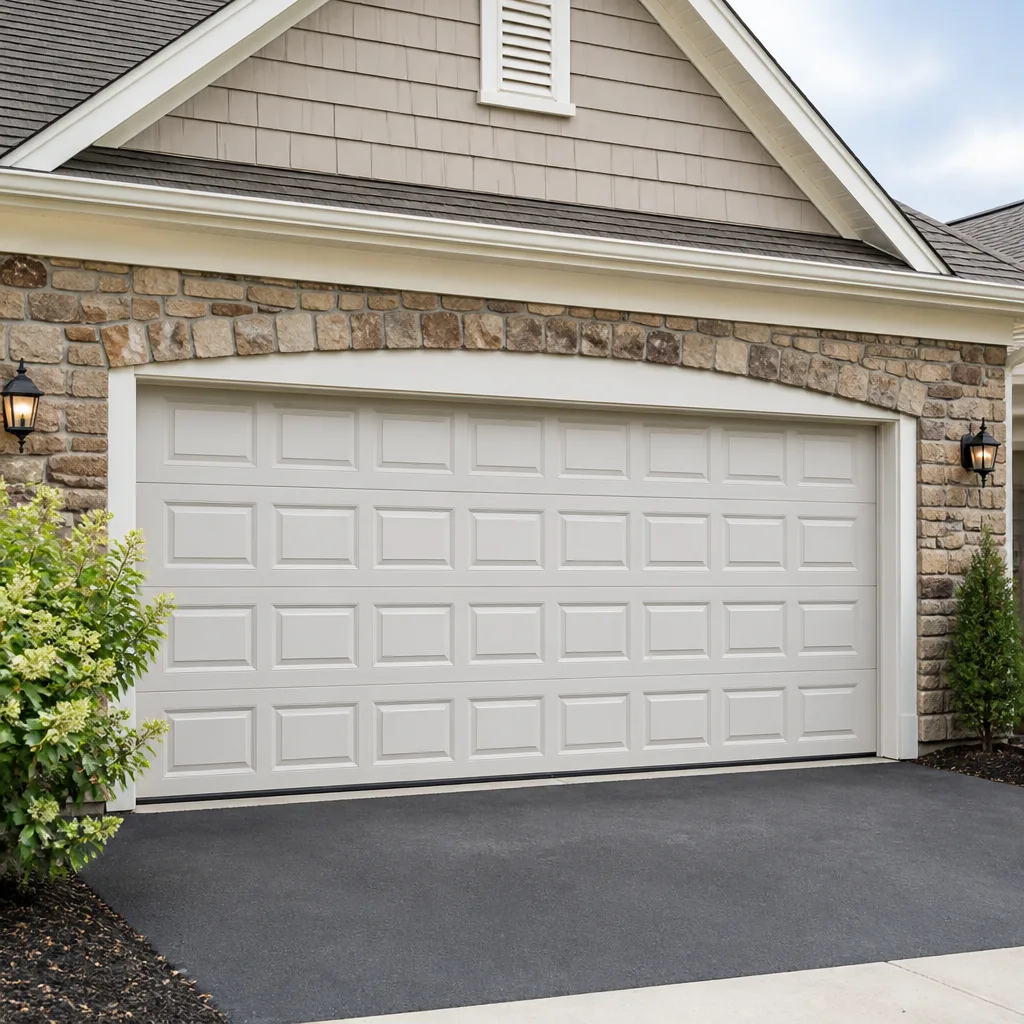 Raised-panel steel
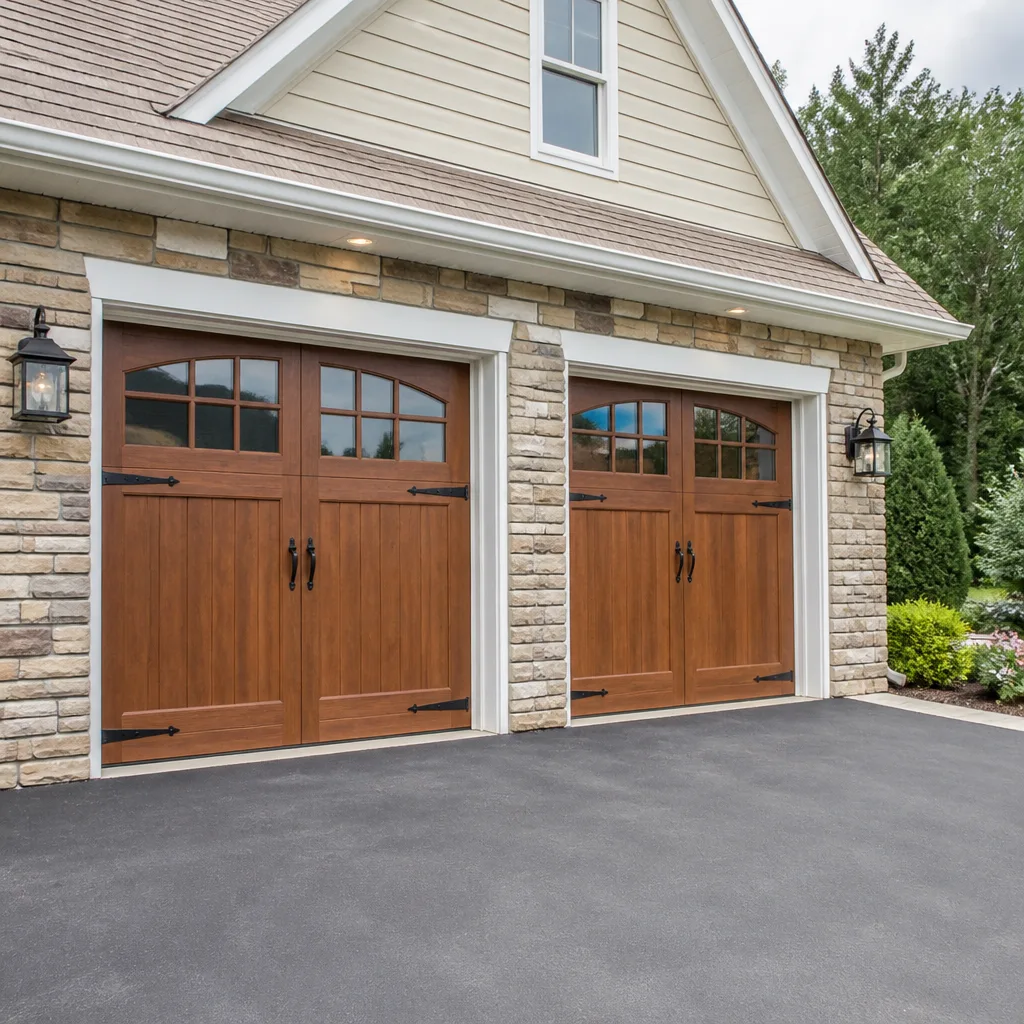 Carriage house
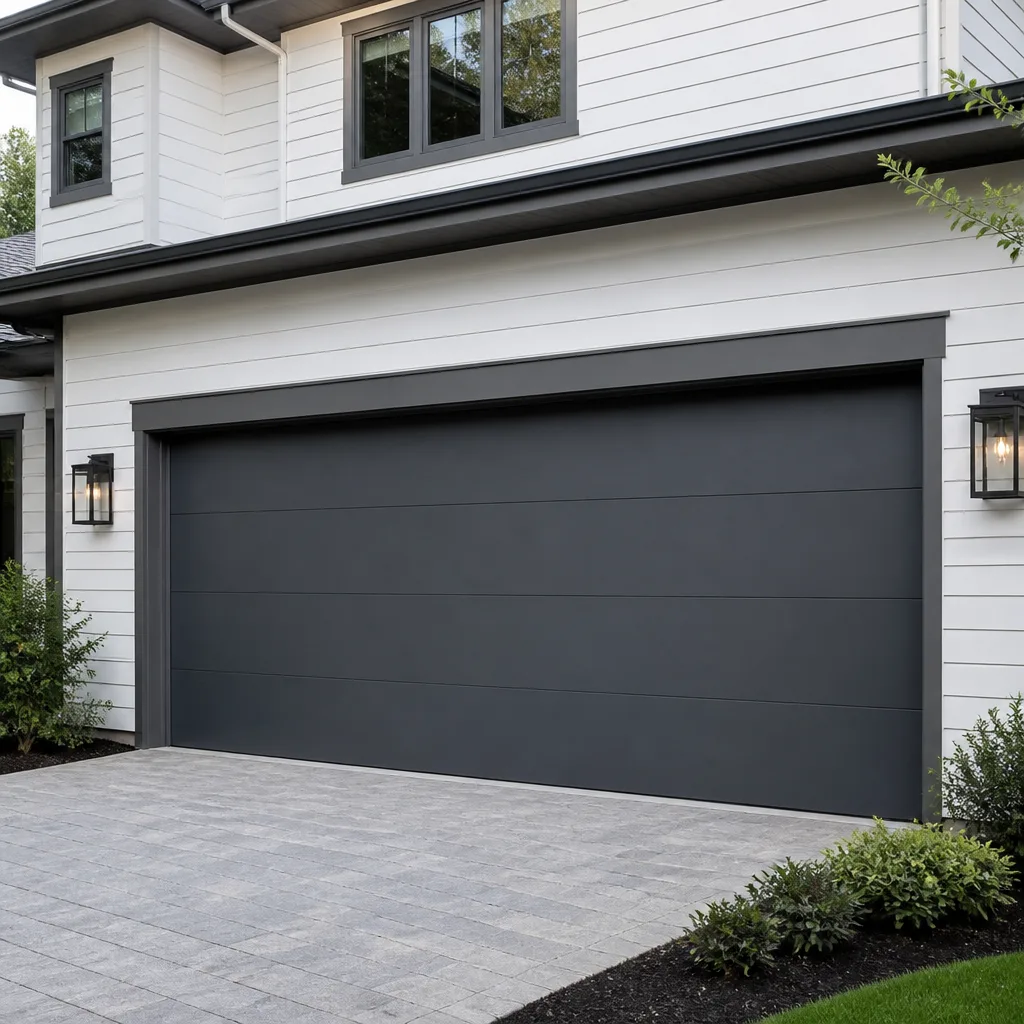 Modern flush
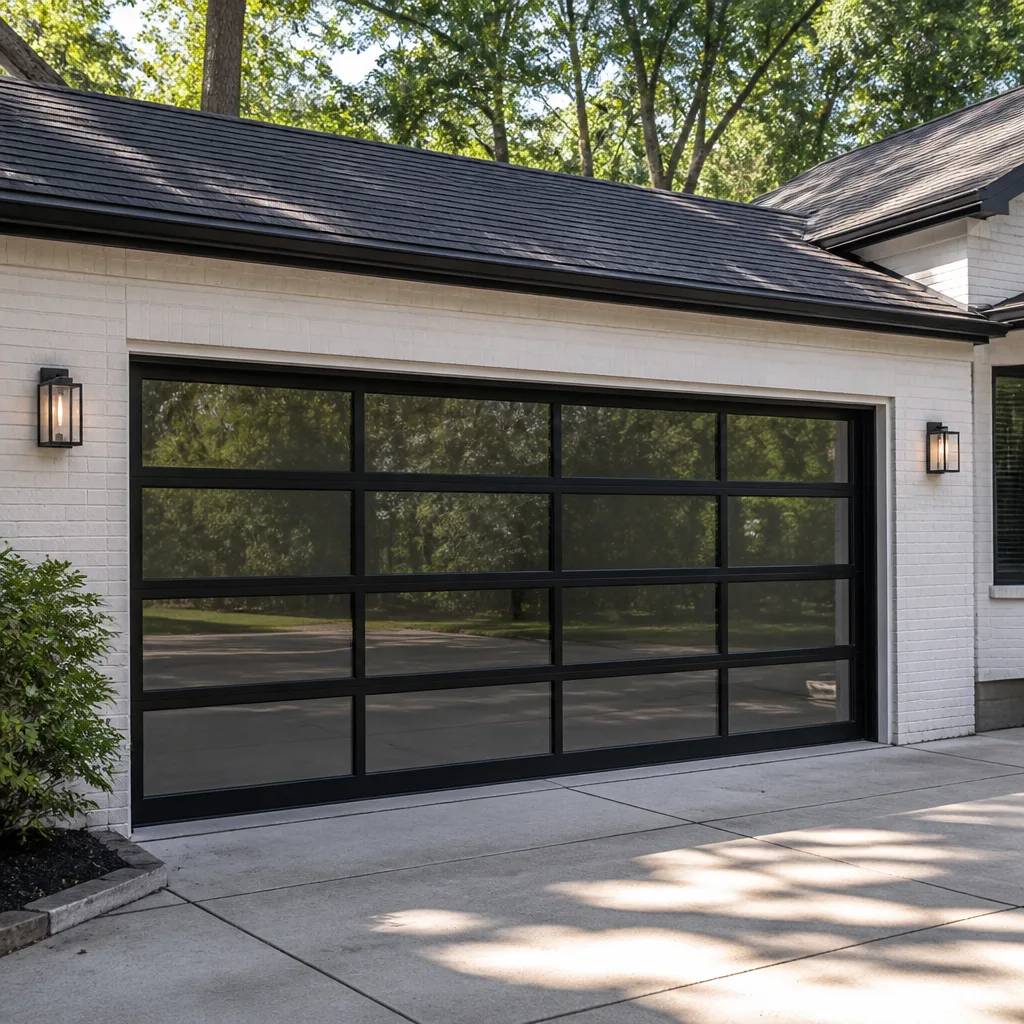 Full-view glass
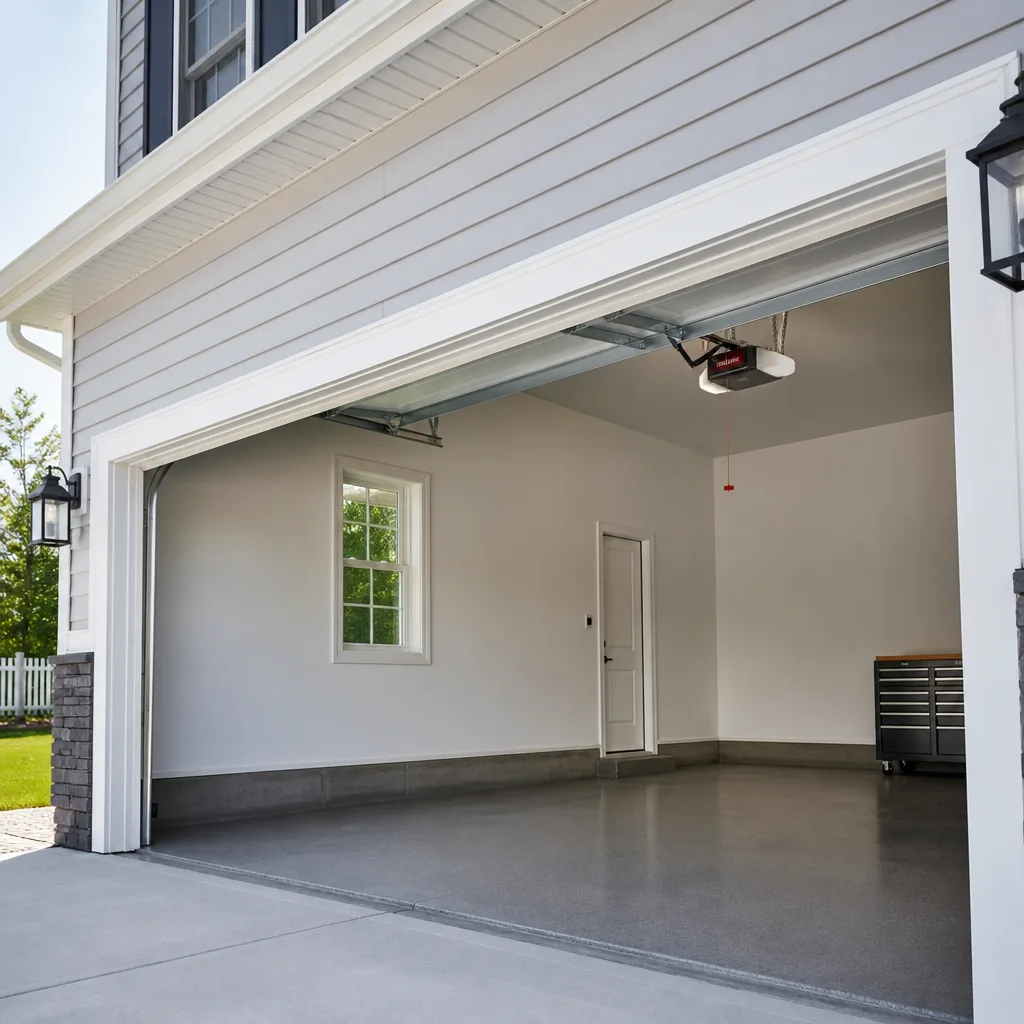 LiftMaster openers
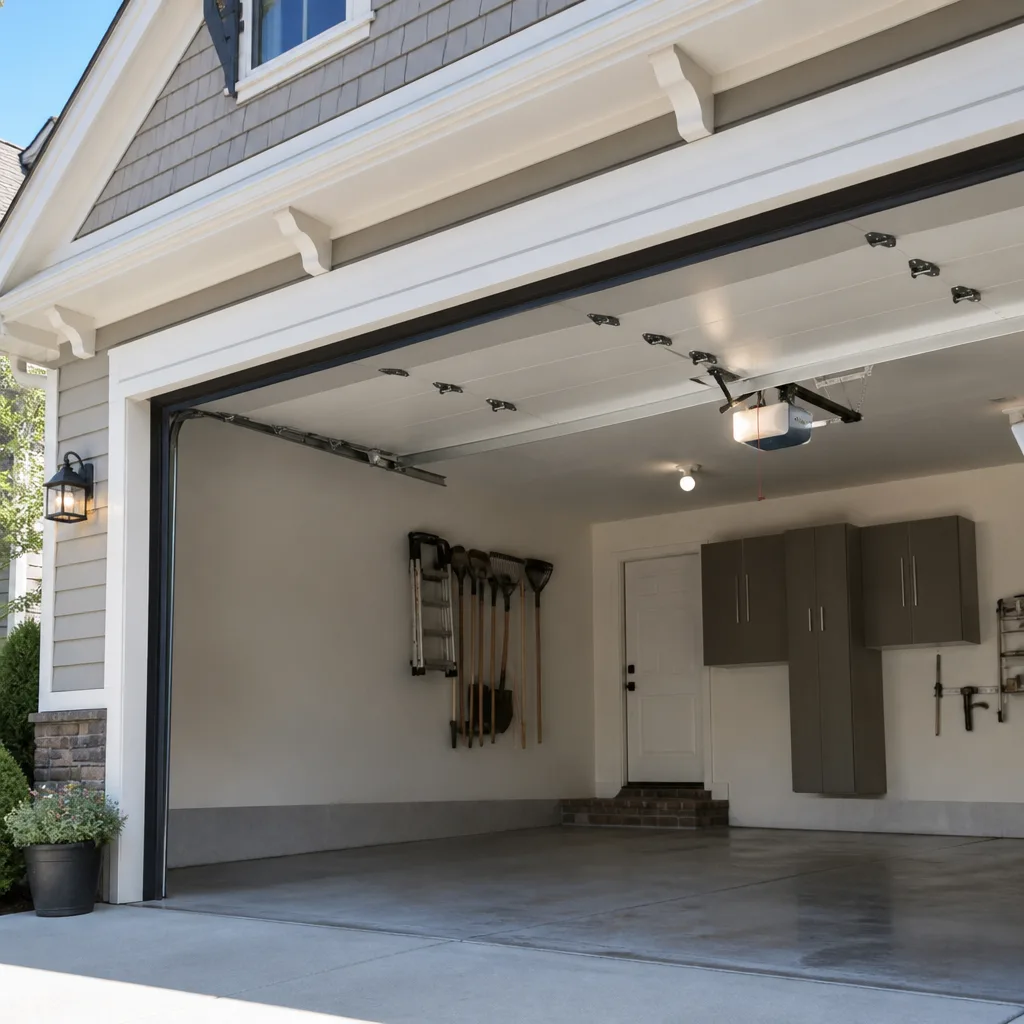 Chamberlain openers
Full 25-point door and opener safety check with every visit - springs, cables, rollers, tracks, and your LiftMaster or Chamberlain opener included
You get a price before we start. It does not change when the truck arrives.
Get your free estimateGarage Door Cost Breakdown: The Santa Ana Homeowner’s Reference for 2026
A $300 spring replacement and an $800 spring replacement can describe the exact same physical repair. The parts are identical. The labor takes the same 45 minutes. The difference lives entirely in how the quote is structured, not in what goes on your door. This guide exists because Santa Ana homeowners deserve to read a quote the way a contractor does. You’ll learn what parts actually cost, what labor should run in this market, where padding hides, and how to spot a legitimate upcharge from a manufactured one. By the end, you’ll be able to evaluate any garage door estimate on its merits, line by line.
Quick Answer
Garage door repair in Santa Ana typically costs between $125 and $400 for most single-component fixes (springs, cables, rollers, sensors) as of 2026, while full door replacement runs $1,600 to $4,200 installed depending on material, insulation, and size. Opener replacement adds $450 to $900. The single biggest price variable isn’t quality – it’s whether the company quotes flat-rate or time-and-materials, and whether you’re paying for brand-name markup or actual brand compatibility.
Styles & brands we work with
Table of Contents
- Component-Level Costs: What Every Major Repair Actually Costs
- How to Read a Garage Door Quote Line by Line
- Repair vs. Replacement: Where the Math Actually Shifts
- Brand Pricing Variance: When It’s Legitimate and When It’s Not
- Santa Ana-Specific Costs: Permits, Disposal, and Climate Factors
- Common Mistakes to Avoid
- When to Call a Professional
- Frequently Asked Questions
Component-Level Costs: What Every Major Repair Actually Costs
Before you can evaluate a quote, you need to know what the parts themselves cost. In 2026, residential garage door parts remain relatively stable in price, but labor rates in Orange County have crept up steadily over the past three years. Here’s the breakdown for Santa Ana specifically, where the housing mix of mid-century ranches in Floral Park, postwar tract homes off Bristol Street, and newer builds in the South Coast Metro area means doors ranging from 20 to 50 years old, each with different wear patterns.
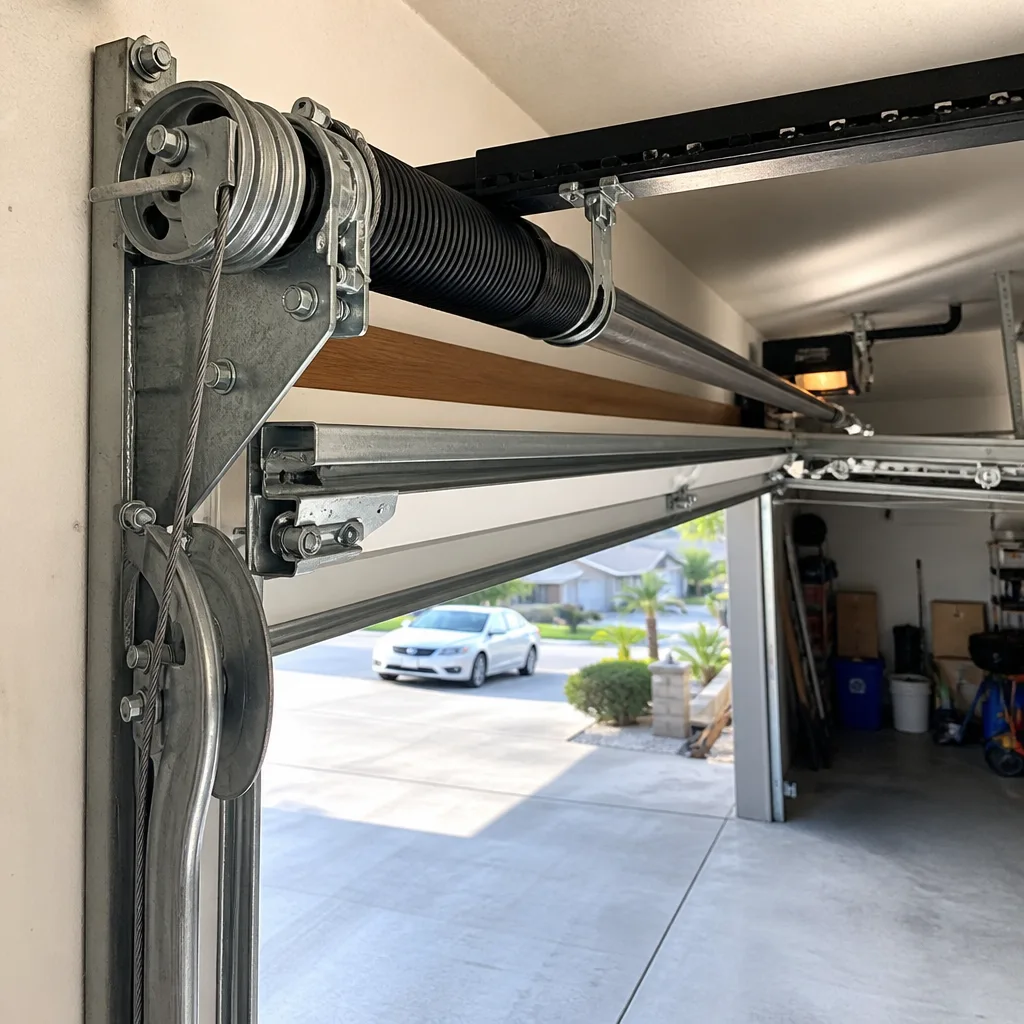
- Torsion spring replacement (single spring): $75 – $110 parts, $100 – $180 labor. Total: $175 – $290. Most homes have two springs, and the second usually goes within six months of the first.
- Torsion spring replacement (pair): $140 – $200 parts, $150 – $220 labor. Total: $290 – $420. Pair replacement is standard practice – the labor overlap makes it cheaper than doing them separately.
- Extension spring replacement (older doors): $60 – $90 parts, $90 – $130 labor. Total: $150 – $220. Common on pre-1990 doors throughout central Santa Ana.
- Cable replacement (both sides): $40 – $70 parts, $80 – $120 labor. Total: $120 – $190. Cables are almost always replaced in pairs.
- Roller replacement (full set of 10): $30 – $60 parts for nylon, $50 – $100 for steel-bearing, $80 – $140 labor. Total: $110 – $240 depending on roller quality.
- Panel replacement (single section): $250 – $500 parts depending on brand and insulation, $150 – $250 labor. Total: $400 – $750. Only worth it if the door is under 10 years old and the panel is available.
- Sensor replacement (photo eyes): $35 – $60 parts, $60 – $90 labor. Total: $95 – $150. Rarely needs full replacement – usually misalignment or wiring.
- Opener replacement (motor unit only, no rail): $180 – $350 parts depending on brand and features, $150 – $250 labor. Total: $330 – $600. Belt drive runs higher than chain.
- Full opener replacement (motor, rail, chain/belt, remotes, wall button): $400 – $650 parts, $200 – $300 labor. Total: $600 – $950.
- Track adjustment and re-alignment: $80 – $150 (labor-dominant, minimal parts). Common after a car bump or earthquake shift.
These ranges reflect what we’re seeing on service calls across Santa Ana in 2026. Actual quotes will vary by door weight, spring cycle rating, opener brand, and whether the technician carries the part on the truck. Companies that stock all eight major brands we service – LiftMaster, Chamberlain, Genie, Clopay, Amarr, Wayne Dalton, Craftsman, and Raynor – complete most repairs in a single visit, which is why their quotes may look slightly higher than a shop that orders parts and returns days later. You’re paying for the inventory, not the guesswork.
How to Read a Garage Door Quote Line by Line
A quote is not a receipt. It’s a positioning document. The same repair can be written fifteen different ways, and each one tells you something about how that company prices, what they carry, and whether they want a long-term relationship or a single transaction. Once you understand how quotes are built, you can identify the three places padding typically appears.
Let’s walk through the anatomy of a quote, using a common scenario: a snapped torsion spring on a 16×7 Clopay steel door in Santa Ana.
- Service call / diagnostic fee: Legitimate if it’s $29 – $79 and waived with repair. Suspicious if it’s over $100 and not credited toward the work. Companies that advertise “$19 service calls” are usually building that difference into the repair line items. You pay the same total either way, but the low-fee company hopes you won’t notice.
- Parts line: Look for the part name, the brand if applicable, and the specification. “Torsion spring, .225 wire, 2-inch ID, 25-inch length, pair” tells you the technician measured the door. “Spring replacement – heavy duty” tells you nothing and gives them room to use whatever is on the truck. Specificity is a trust signal.
- Labor line: Should be a single number or clear hourly rate with estimated hours. Flat-rate quotes are the industry standard for springs, cables, and rollers. If the labor is broken into multiple line items – “install spring,” “wind spring,” “test spring” – that’s padding, not transparency.
- Brand-premium hardware: If the quote specifies “Genie OEM spring” at a price 40% above the standard spring, question it. Torsion springs are not brand-specific. They are door-specific, rated by weight, wire diameter, and cycle count. The spring on a Genie-installed door is not a Genie spring. It’s a spring sized to the door. A legitimate brand premium exists on opener circuit boards and some proprietary Clopay panel hardware, but not on springs, cables, or rollers.
- Unnecessary secondary repairs: “We noticed your rollers are wearing, so we’ve included those.” Did they ask you? Are the rollers actually failing, or are they just not new? A technician who quotes an unrequested repair before finishing the requested one is either upselling or afraid the primary fix won’t fully solve the noise. Ask them to separate the quote: “What does the spring alone cost, and what would the rollers cost separately?” If the spring fix won’t work without the roller fix, they should be able to explain exactly why in mechanical terms, not vague ones.
- Disposal / environmental fees: Legitimate in Santa Ana because the city’s solid waste ordinance requires certain door components (mainly old openers with circuit boards and batteries) to be recycled through e-waste channels, not dumped in standard construction bins. $15 – $40 is normal. $80 is a red flag.
The goal isn’t to find the cheapest quote. It’s to find the quote where every line earns its place. If a company can’t explain why a line exists, that line doesn’t belong on your invoice.
Repair vs. Replacement: Where the Math Actually Shifts
The repair-versus-replace decision is rarely as clean as contractors present it. Most companies have an incentive structure. A repair-focused shop makes money on volume of service calls, so they may patch a failing door repeatedly rather than suggest replacement. A sales-driven installer makes margin on a new door and opener, so they may recommend replacement when three more years of repair would cost you less. Here’s the honest math for Santa Ana homeowners, based on 2026 material and labor costs.
The breakeven rule we apply on our own estimates: if a single repair exceeds 50% of the depreciated value of the existing door, or if cumulative repairs over 18 months would exceed 60% of new-door cost, replacement is the financially defensible choice. Here’s what that looks like in practice:
- Snapped spring: $290 – $420. Always repair unless the door is at end of life. A new door includes new springs, but you don’t buy a $2,000 door because a $300 part failed.
- Damaged bottom panel (car bump, common in tight Santa Ana alley-loaded garages): $400 – $750 for panel replacement. If the door is under 8 years old and the panel is still in production, repair. If the door is 15+ years old and the panel is discontinued, replacement starts to make sense, because a new panel won’t match the faded color of the old sections.
- Opener motor failure at year 12: $330 – $950 depending on whether you replace just the motor or the full unit. If the door itself is in good shape, replace the opener. If both are at end of life, package them. Combining an opener replacement with a door replacement saves $150 – $250 in duplicated labor versus doing them separately.
- Track damage from a side impact: $80 – $150 for realignment, $200 – $350 for partial track section replacement. If the tracks are salvageable, repair is almost always right. If the door has jumped the track at speed, the damage may extend to the hinges and the door itself, and a full assessment matters.
- Multiple simultaneous failures (spring, two cables, three rollers on a 20-year-old wooden door in Floral Park or West Floral Park): combined repair cost may hit $600 – $800. At that point, a new insulated steel door at $1,800 – $2,400 installed is worth considering, because the old door will continue failing in new ways.
Contractors don’t always tell you the third-time-repair math because it’s against their short-term interest. A repair shop makes more over three visits than on one install. A replacement shop makes more on one install than on three visits. Neither has clean incentives. The numbers above are your neutral ground.
If you’re weighing this decision, Garage Door Repair in Santa Ana covers our repair approach in depth, and Garage Door Installation in Santa Ana lays out what a full replacement involves.
Brand Pricing Variance: When It’s Legitimate and When It’s Not
“Why does the same repair cost more on my Chamberlain than on my neighbor’s Genie?” Fair question. We hear it weekly. The answer is that some brand-driven price differences are mechanically real, and some are completely manufactured. Knowing which is which will save you hundreds over the life of your door.
Where brand matters – and legitimately changes price:
- Opener circuit boards: LiftMaster, Chamberlain, and Genie use proprietary logic boards. They are not interchangeable. A replacement board for a Genie belt-drive opener runs $120 – $180, while a comparable Chamberlain board runs $90 – $140 depending on the model year. This is a real difference – the parts have to match the unit.
- Clopay and Amarr panel systems: Panel profiles, tongue-and-groove dimensions, and color matching are brand-proprietary. If you need a specific Clopay panel in a specific color, the part price reflects that exclusivity. Amarr panels are similarly proprietary, though their standard white and almond panels are widely stocked, which keeps prices competitive.
- Smart opener integration: If your opener has MyQ (LiftMaster/Chamberlain) or Aladdin (Genie), and you want to retain smart features, the replacement opener has to be compatible with that ecosystem. That narrows the options and can add $50 – $100 to the opener cost.
Where brand absolutely should not change your price:
- Springs: No manufacturer makes springs branded to the door. Springs are wound to specifications based on door weight and cycle requirements. Any company charging a “Clopay spring premium” or “Genie spring premium” is adding margin with no material justification.
- Cables: Same principle. Cables are aircraft-grade galvanized steel cut and swaged to length. Brand has zero bearing.
- Rollers: What matters is the material – nylon vs. steel-bearing – and the stem profile. The brand name on the roller package doesn’t change performance.
- Hinges and brackets: Industry-standard sizes. A Wayne Dalton hinge and an Amarr hinge at the same gauge and geometry bolt on identically.
The cleaning question to ask any contractor: “Can you put the brand of each part in writing on the quote, and explain what would change if I chose a different brand?” A specialist who works across all eight major brands – like our team does – answers that in forty seconds. A dealer pushing a single line will deflect. Garage Door Opener Repair in Santa Ana goes deeper on how opener brand affects repair decisions.
Santa Ana-Specific Costs: Permits, Disposal, and Climate Factors
Santa Ana affects garage door pricing in ways that don’t appear on a generic national guide. The climate, the housing stock, the local regulations, and the labor market all shape what you’ll actually pay in this city, not in Anaheim or Irvine or somewhere with the same median income but different conditions.
Permits: When Santa Ana Requires One
For a direct like-for-like door replacement (same size opening, no structural changes), the City of Santa Ana generally classifies the work as maintenance and does not require a building permit. The key word is structural. If you’re widening the opening, adding a second door, or replacing rotted framing, that triggers a permit and the cost runs $150 – $400 depending on the scope. The contractor should handle this, but you need to confirm it’s included in the bid. See our Garage Door Permits, Codes & Inspections in CA: What You Need to Know for more details. A quote that includes a permit line for a like-for-like swap is padding. A quote that omits a permit line for structural work is cutting corners. Either one tells you something.
Disposal Requirements
Santa Ana requires e-waste recycling for opener circuit boards, batteries, and remote controls under the city’s mandatory commercial and multifamily recycling ordinance. This affects cost in two ways. First, it adds a legitimate $15 – $40 disposal line on opener replacements. Second, it means old doors can’t simply be dropped in a construction dumpster at no cost – the metal tracks and springs go to scrap, and the panels to a construction waste facility that charges by weight. That’s typically $40 – $80 for a full door removal and disposal. Legitimate, but itemized, not buried.
Climate Factors That Actually Matter
Santa Ana’s stretch of 90-plus-degree summer days through July, August, and September does three things to garage doors. First, it cuts torsion spring life by roughly 10 – 15% compared to coastal cities – heat accelerates metal fatigue, and a spring rated for 10,000 cycles in Seal Beach may give you 8,500 cycles in the Denver Park or Mar-Les neighborhoods where the garage faces southwest and bakes all afternoon. Second, adhesive-backed weatherstripping degrades faster, so bottom-seal replacement is a more frequent line item here than in, say, Huntington Beach. Third, the Santa Ana winds of October and November push fine dust into tracks and bearings, which accelerates roller wear on uninsulated doors. None of these make repairs dramatically more expensive, but they do make them more frequent, and that’s worth budgeting for. Our Garage Door Repair Maintenance Checklist for Santa Ana Homeowners can help you stay ahead of the wear.
Labor Market Reality
Orange County contractor labor rates in 2026 run 15 – 20% higher than the Inland Empire and roughly 10% higher than the national residential average. That’s not a scam. It’s the cost of doing business where commercial real estate for a warehouse, workers’ comp insurance, and technician wages all price to the local economy. A Santa Ana company quoting $180 labor for a spring job isn’t gouging. A company quoting $80 labor is either a one-guy operation without insurance, using substandard parts, or building the difference into the part price. The total matters more than the split.
Common Mistakes to Avoid
- Accepting a quote without a parts breakdown: If the invoice just says “repair door – $450” with no parts or labor split, you can’t compare it to anything. Ask for it itemized. A company that won’t itemize is either disorganized or hiding margin. Neither works for you.
- Paying a premium for “OEM springs” or “OEM cables”: Springs and cables don’t have OEM equivalents. They’re sized to the door, not branded to it. Anyone charging extra for a “Genie spring” is inventing a premium.
- Replacing instead of repairing out of fear: “That spring could fail again” is true of every spring ever installed. A quality spring rated for 10,000 cycles lasts 8 – 12 years in a Santa Ana garage. Replacement is rarely the answer to a single component failure.
- Ignoring the second spring: If one torsion spring snapped, the other has the same number of cycles on it. Replacing just one means paying labor twice within a year. It’s not an upsell – it’s the cheapest way to do the job correctly.
- Choosing flat-rate quotes without knowing what the flat rate includes: Flat-rate pricing is fine. It’s actually cleaner than hourly. But you need to know whether the rate covers just the part install or also includes realignment, lubrication, and testing. A $250 flat-rate spring job that includes full tune-up is a better deal than a $180 job where the tune-up is added separately.
- Skipping the free pre-work price confirmation: Here’s the thing we never do: start work without a confirmed, agreed price. The quote is the agreement. If a company starts work before quoting, or changes the price mid-job without explanation, stop the work and get it in writing. The price you agree to before the wrench turns should be the price on the invoice unless you approved a change order.
- Assuming a cheap service call means a cheap job: The total invoice is the only number that matters. Companies with $19 service calls and companies with $79 service calls often land within $30 of each other on final invoice. The high-service-fee shop is just more honest about what the truck roll costs.
When to Call a Professional
A worn-out bottom seal or a noisy roller you can see from the ground – those are simple. But anything involving torsion springs, cables under tension, or opener electronics carries real risk. A spring under load holds enough energy to cause serious injury if released improperly. Cables under tension can snap and whip. Circuit boards fail in ways that are hard to diagnose without a multimeter and experience. If your door won’t open, makes a sharp bang when opening, sits visibly uneven, or has a spring that’s snapped, call someone who does this work every day. Santa Ana Garage Door Service offers free estimates in Santa Ana – call (855) 341-7810. We’re at Santa Ana Garage Door Service home if you want to see exactly what we cover before calling.
Frequently Asked Questions
In 2026, most single-component garage door repairs in Santa Ana run between $125 and $400, with the most common repair – a snapped torsion spring – costing $175 to $420 depending on whether one or both springs are replaced. Full door replacement is a separate category entirely, running $1,600 to $4,200 installed. To get an exact number for your specific door and problem, call us at (855) 341-7810 – estimates are free, and the price is agreed before any work starts.
The variation comes from three sources: parts quality (a $40 spring rated for 5,000 cycles vs. a $90 spring rated for 10,000 cycles), labor structure (flat-rate vs. hourly, company overhead vs. solo operator), and outright padding. In Santa Ana, most spring replacement quotes will land between $290 and $420 for a pair – anything meaningfully outside that range deserves a line-item explanation from the company. Ask for the part specification on the quote, not just the price. Call (855) 341-7810 if you want us to walk through your current quote line by line, even if you don’t hire us.
Repair is almost always the right call for a single failed component – spring, cable, roller, sensor, or opener motor – as long as the door itself is structurally sound and under about 15 years old. Replacement makes financial sense when cumulative repairs over 18 months would exceed 60% of new-door cost, or when the door is at the end of its service life and panels are no longer available. We work both sides of this every week in Santa Ana, and we’ll tell you honestly which one the math supports. Call (855) 341-7810 for a straight answer on your specific door.
Yes, but only for specific components. Opener circuit boards, replacement panels, and smart-home integration features are brand-specific and carry legitimate price differences – a Genie board costs more than a Chamberlain board in some model years, and a Clopay color-matched panel carries a premium over a generic white panel. Springs, cables, rollers, and hinges are not brand-specific, and any upcharge for “OEM” versions of those parts is padding. Our team works on all eight major brands – LiftMaster, Chamberlain, Genie, Clopay, Amarr, Wayne Dalton, Craftsman, and Raynor – so we can tell you what’s real and what’s markup on your specific equipment. Call (855) 341-7810 with your door’s brand and model.
For a like-for-like replacement – same size opening, no structural changes, no framing work – no permit is required. If the project involves widening the opening, adding a door, or replacing structural framing, a city permit is required and typically runs $150 to $400. Your contractor should know the difference and include permit costs in the bid when required. If structural work is being quoted without a permit line, ask why.
It shouldn’t, as long as you described the problem accurately. The price quoted before work begins should be the price on the invoice, unless the technician finds additional issues and you approve a written change order. This is our standard practice at Santa Ana Garage Door Service – the number we agree on is the number you pay. If a company routinely changes prices after seeing the door, that’s a pattern, not an isolated incident. Call (855) 341-7810 for an honest, phone-based estimate that covers what you actually described.
The Bottom Line
Garage door pricing in Santa Ana varies widely not because quality varies widely, but because pricing structures do. Flat-rate versus hourly. Itemized parts versus bundled sums. Real brand premiums on proprietary components versus invented premiums on springs and cables. Legitimate Santa Ana disposal fees versus padded environmental charges. The homeowner who can read a quote line by line is the homeowner who never overpays. You now know what a spring should cost, what labor should run in this market, and which line items earn their place. Bring that knowledge to every estimate. For more guides & resources, explore our blog. And when you want a team that breaks down the quote before doing the work – whatever brand is on your door, we already know it – call (855) 341-7810. The estimate is free, and the price you agree to is the price you pay.
Written by the team at Santa Ana Garage Door Service, serving Santa Ana since 2011.
See the difference
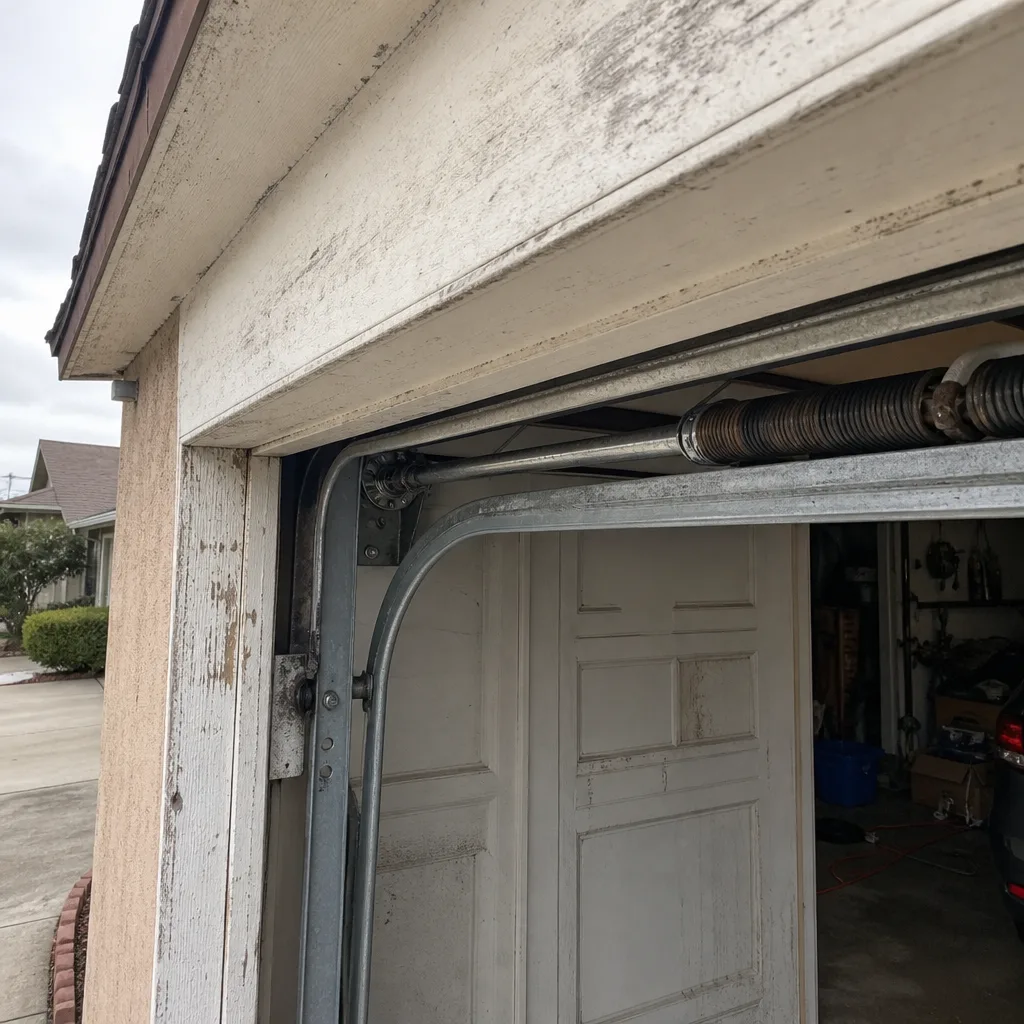 Before
 After
 Before
 After
 Before
 After