
Last updated October 31, 2026
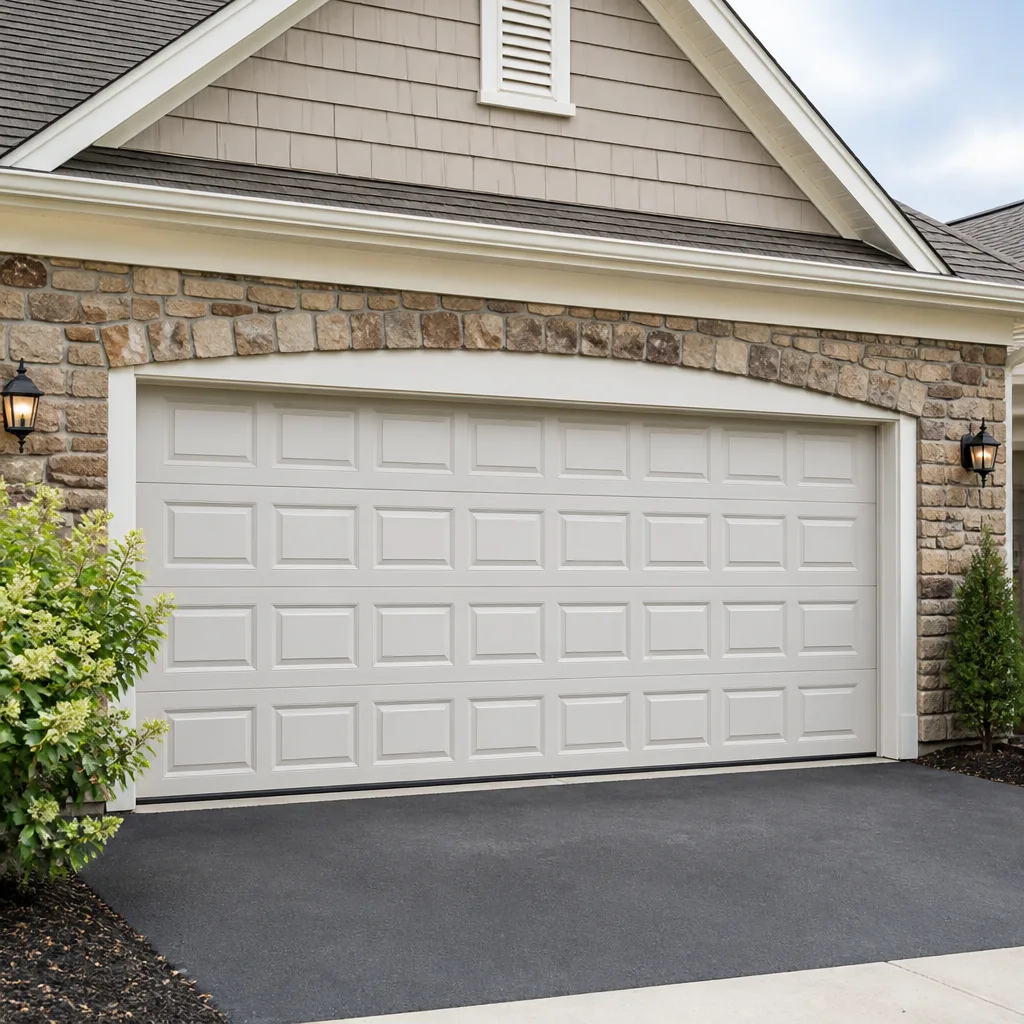 Raised-panel steel
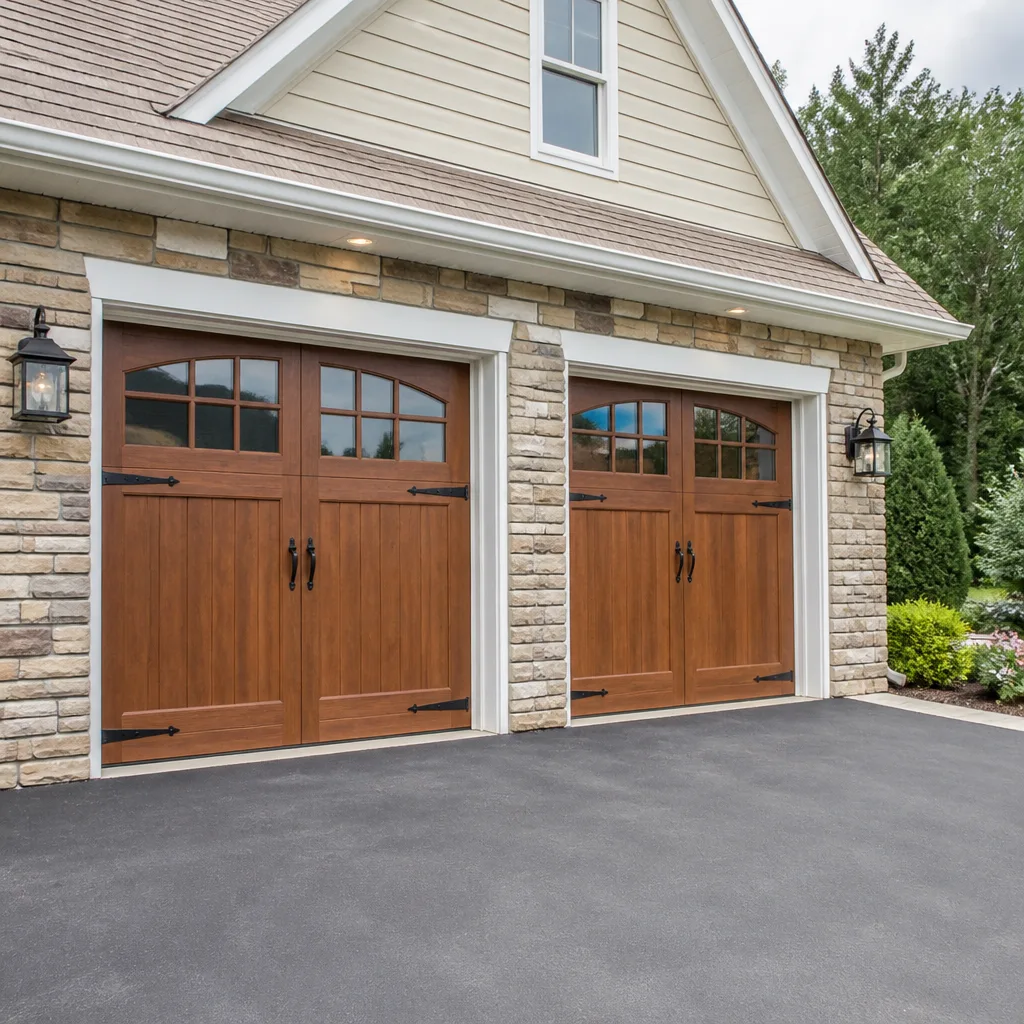 Carriage house
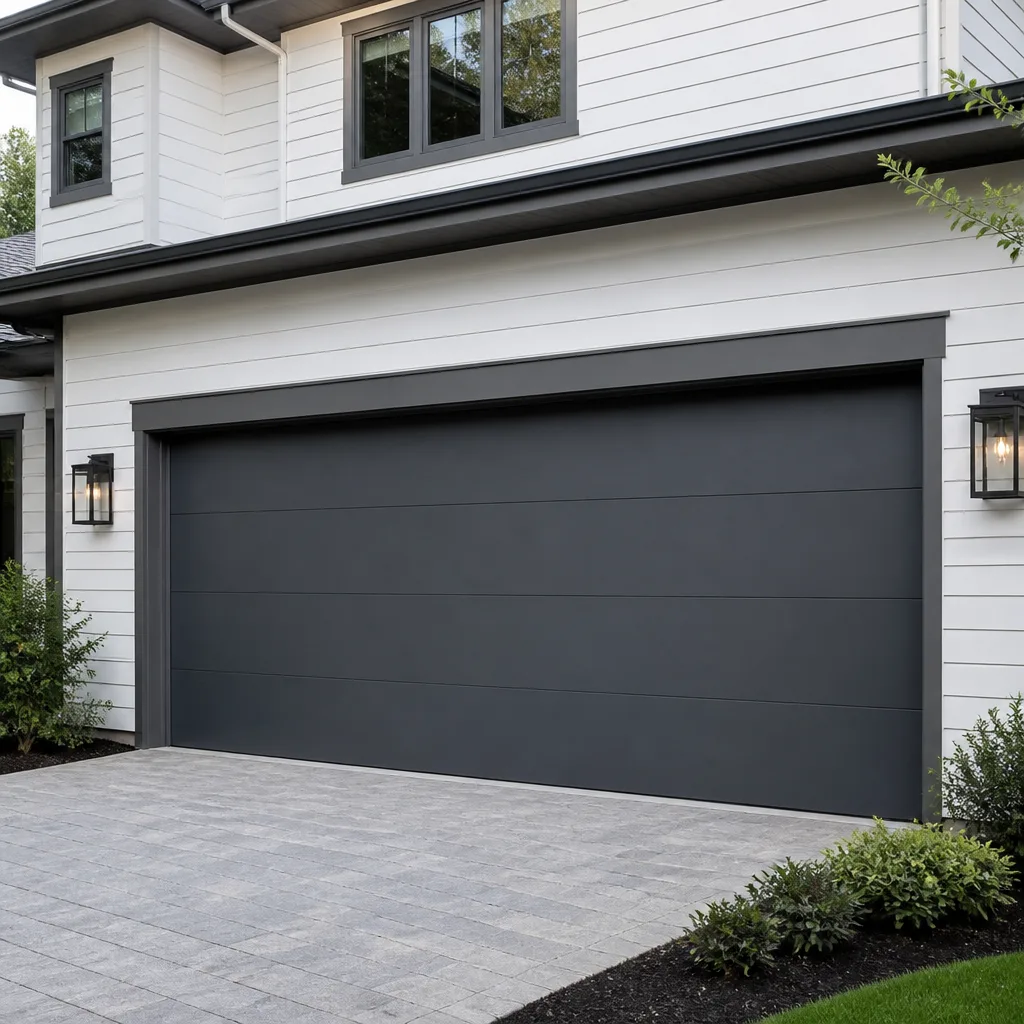 Modern flush
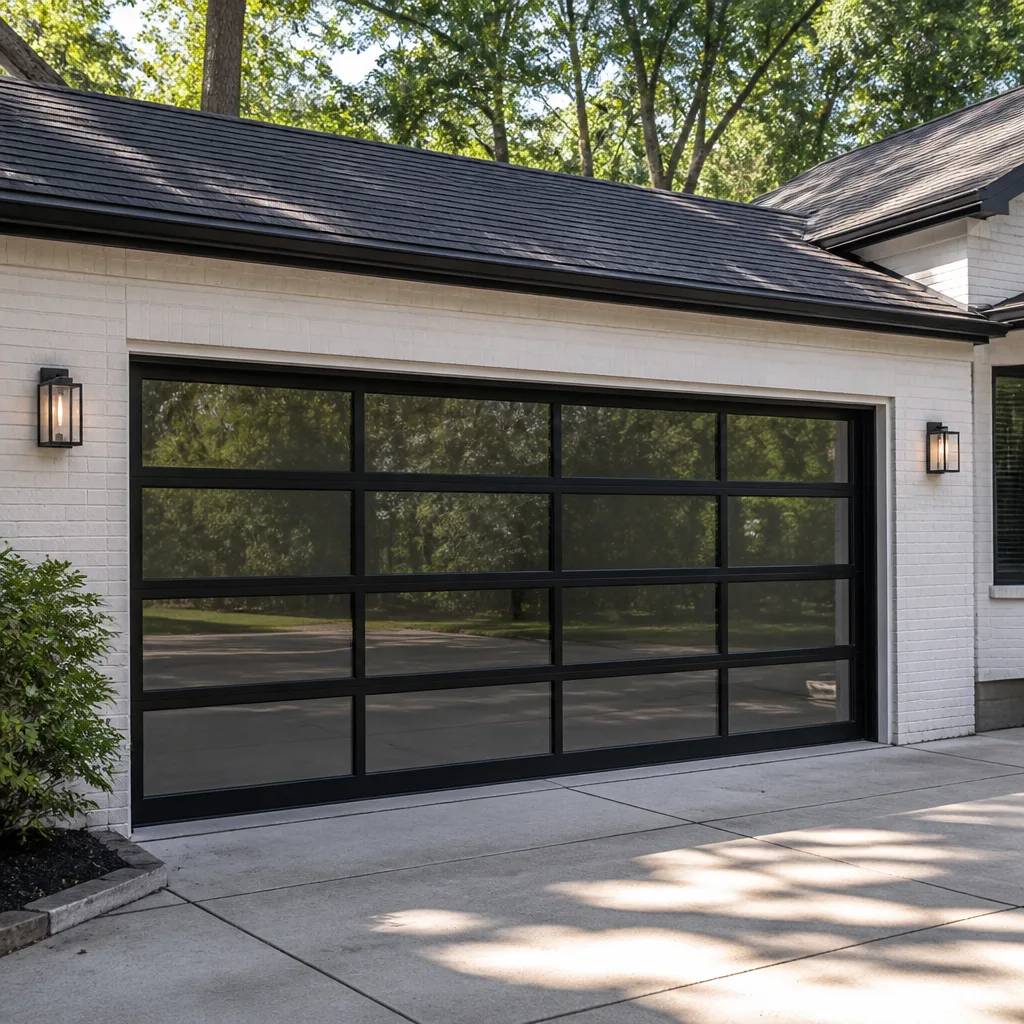 Full-view glass
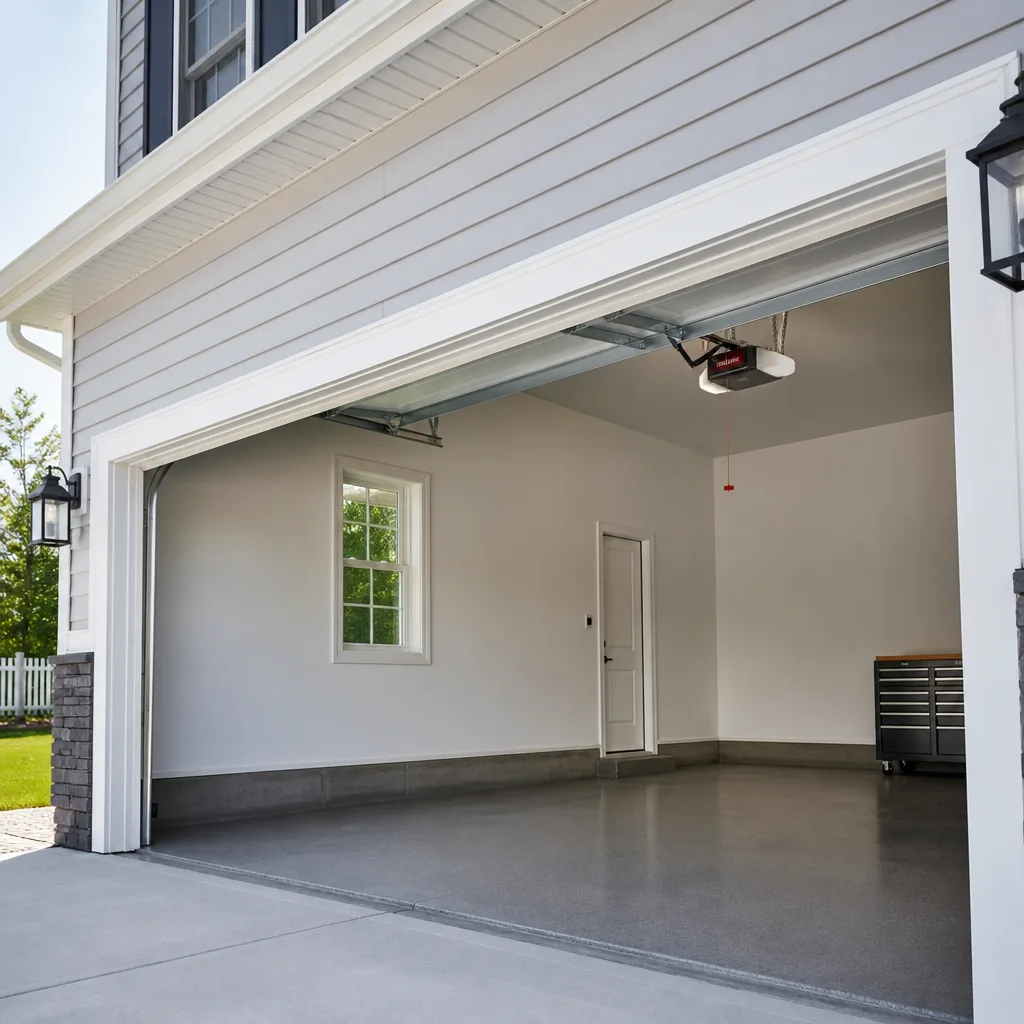 LiftMaster openers
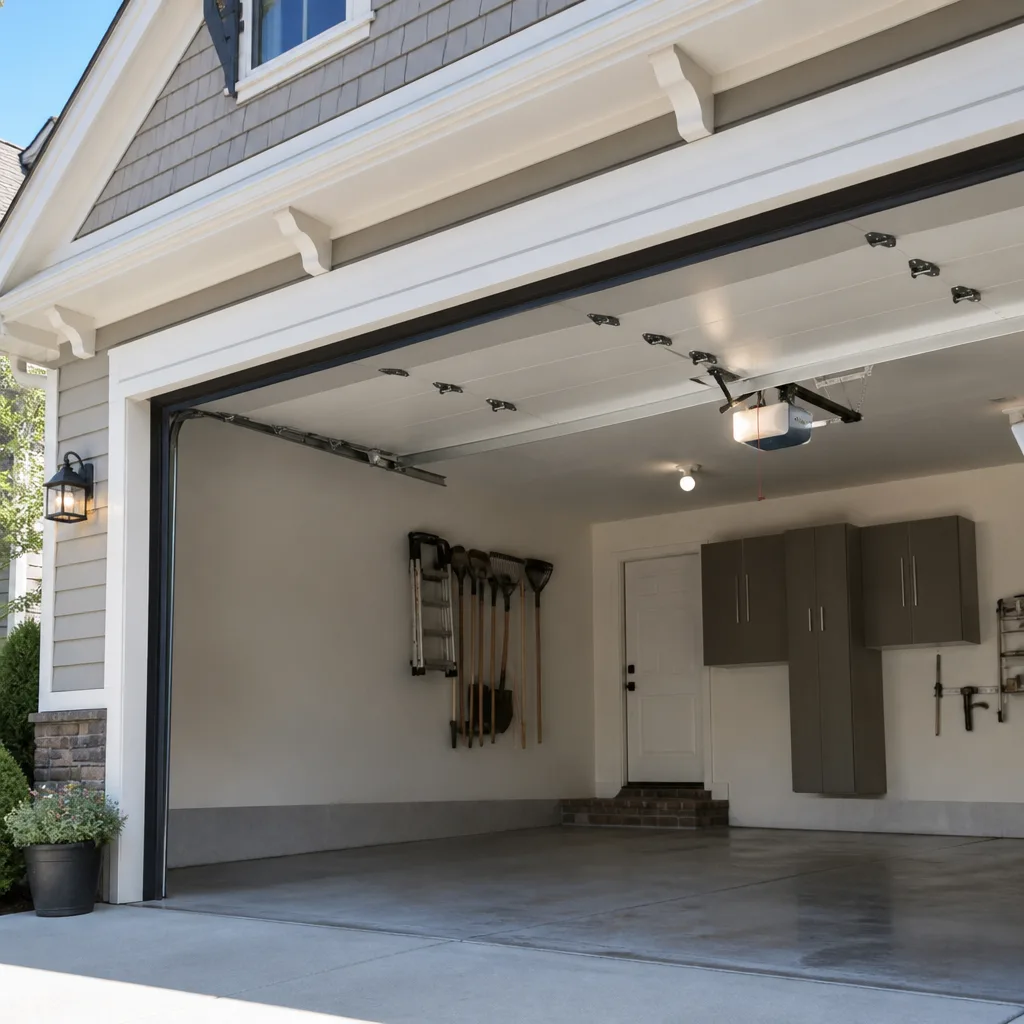 Chamberlain openers
Full 25-point door and opener safety check with every visit - springs, cables, rollers, tracks, and your LiftMaster or Chamberlain opener included
You get a price before we start. It does not change when the truck arrives.
Get your free estimateGarage Door Emergency Preparedness Guide for Santa Ana Homes
Here’s a fact most Santa Ana homeowners never hear until it’s 11pm and the wind is shaking the rafters: a garage door is the single largest moving object in your house, and when it fails in an emergency, it fails fast. Post-earthquake track damage, a power outage during a Santa Ana wind event, a spring that snaps without warning. These aren’t maintenance issues you schedule around. They’re moments where knowing the correct sequence of actions, in order, determines whether you have a secure home or an open 16-foot-wide invitation to everything you own. This guide walks you through the exact steps to take when your garage door becomes an emergency, written for the moment things go wrong, not for calm reading afterward. For Garage Door Repair Troubleshooting: Common Problems and How to Fix Them, see our dedicated guide.
Quick Answer
In a garage door emergency in Santa Ana, your first job is to secure the door safely, not to force it. If the door is stuck open, disengage the opener using the red manual release cord and lower the door by hand, then secure it with locking pliers or a padlock through the track. If the door won’t move or you see a broken spring or damaged cable, stop immediately and call a garage door specialist at (855) 341-7810. Forcing a door with a broken spring can cause the panel to slam down under its full weight, which is how serious injuries and major property damage happen.
Styles & brands we work with
Table of Contents
- How to Operate Your Garage Door During a Santa Ana Power Outage
- The Manual Release Procedure Done Correctly
- How to Temporarily Secure an Open Garage Door
- Post-Earthquake Garage Door Inspection Protocol
- What to Do When a Spring Snaps
- Who to Call and in What Order
- Preventive Steps Santa Ana Homeowners Should Take Now
How to Operate Your Garage Door During a Santa Ana Power Outage
Santa Ana wind events knock out power with predictable regularity, and when the grid goes down, your opener is a paperweight. The door itself still works fine, but it needs to be operated manually. This is simpler than most people assume, but the order of operations matters. Do it wrong and you can strand the door in the open position or cause the opener to jam when power returns.
Here’s the sequence we recommend, based on what our technicians have seen across thousands of service calls in Santa Ana:
- Confirm the door is fully closed before disengaging. If the door is open when power goes out, do not disengage the opener. The door will drop. Instead, secure it in the open position temporarily using the locking method described later in this guide, or lower it manually with help from a second person who can support some of the weight.
- Pull the red emergency release cord. This cord hangs from the opener rail, usually near the motor unit or about two feet from the door. Pull it straight down, once, firmly. You’ll hear a click as the carriage disengages from the drive chain or belt.
- Lift the door by hand. A properly balanced garage door should lift smoothly and stay open roughly three to four feet off the ground on its own. If it feels heavy, drops when you let go, or won’t stay up, the springs are either worn or broken. Stop and call a professional.
- Operate the door fully manually. Lift it completely open or pull it completely closed. Do not leave a manually-operated door partially open, especially in Santa Ana, where wind gusts can push an unsecured panel off its tracks.
- Re-engage the opener when power returns. Before reconnecting, confirm the opener switch or wall button is in the “off” or “locked” position. Then lift the door slightly and pull the red cord toward the motor unit. You’ll hear a second click when the carriage reconnects to the drive. Test with the wall button once, not the remote, to confirm alignment.
One detail most guides skip: if you have a newer LiftMaster or Chamberlain opener with a battery backup, you may not need to disengage anything at all. Those units provide a limited number of open-and-close cycles during an outage. But battery backup only helps if the battery is still healthy, and in our experience in Santa Ana, most homeowners never test them until the power is already out.
The Manual Release Procedure Done Correctly
The red manual release cord is the most misunderstood component on any garage door system. It’s designed to be simple, but the two most common mistakes homeowners make turn a minor inconvenience into a real problem. We see both regularly on service calls across Santa Ana.
The first mistake is pulling the cord while the door is open. The opener holds the door up through the drive system, but when that carriage disengages, the door’s full weight transfers to the springs. If the springs are healthy, the door will lower itself at a controlled rate. If they’re not, it drops. Fast. We’ve repaired panels, dented car hoods, and replaced broken glass from this exact scenario.
The second mistake is forgetting to re-engage properly, or worse, re-engaging while the opener is in the wrong cycle. The fix is straightforward:
- Disconnect the opener only when the door is fully closed or fully secured in the open position.
- After manual use, raise or lower the door so the carriage and the release mechanism are aligned. On most openers, you’ll hear a distinct click when they seat correctly.
- Press the wall button once to confirm the opener picks up the door cleanly. If it jerks or the door doesn’t move, stop and re-check the alignment.
Genie and Craftsman openers, which are common throughout Santa Ana homes, use slightly different carriage designs, but the same principle applies: don’t force the re-engagement. If it doesn’t seat with a firm pull on the release cord, the problem is alignment, not strength. Call a specialist who works on your specific opener brand rather than risking damage to the drive gear.
How to Temporarily Secure an Open Garage Door
This is the scenario that defines a Santa Ana garage door emergency: a door stuck open at night with high winds forecast, or rain moving in, or a neighborhood where an open garage is an open invitation. If the door won’t close mechanically, whether from a snapped spring, a jammed track, or a failed opener, you need a temporary physical lockout. Here’s how to make one with materials you likely already have:
- Locking pliers or a C-clamp on the track. Clamp them directly onto the vertical track, just below one of the door’s bottom rollers. This blocks the door from being lifted from outside. On most residential doors in Santa Ana, standard 6-inch locking pliers do the job.
- A padlock through a track hole. Many tracks have pre-drilled holes near the bottom. If yours does, a padlock or even a bolt through the hole works as a physical stop. Without a hole, run a cable lock around the track and through a convenient point on the door frame.
- Disengage the opener and lower the door by hand. If the door itself is functional but the opener failed, follow the manual release procedure and close it manually, then add one of the physical locks above.
- Block the photoelectric sensors’ line of sight as a temporary measure. This won’t secure anything, but on some openers it will prevent accidental closure while you’re working around the door. Never rely on this alone.
A door that’s stuck open on an Amarr or Wayne Dalton system can usually be lowered manually if the springs are intact, but if the spring has snapped, do not try to force the door down. The panel weighs 150 to 300 pounds depending on material and size, and without a functioning counterbalance, you’re fighting gravity. We’d rather you leave the door open and call us at (855) 341-7810 than risk a crushed finger or a door through the back window of your car.
Post-Earthquake Garage Door Inspection Protocol
Santa Ana sits in seismic territory, and even moderate shaking can shift a garage door system enough to cause a failure days or weeks later. The problem is rarely obvious immediately after the quake. What we see in our service calls is a chain reaction: a track that shifted a quarter inch causes the rollers to bind, which overloads the opener’s drive gear, which fails a week later when the homeowner least expects it. Here’s the inspection sequence to follow after any seismic event strong enough to rattle your windows:
- Look at the horizontal tracks first. These run parallel to the ceiling. After shaking, they can shift sideways or pull away from their mounting brackets. A visible gap or sag means do not operate the door. The tracks carry the full travel path of the rollers, and a derailment at speed will send the panel into the floor or into whatever’s parked under it.
- Check the vertical track alignment. Stand inside the garage and sight down each vertical track. They should be parallel to each other and plumb. A half inch of lean is enough to bind the rollers.
- Inspect the spring mounting brackets. On torsion spring systems above the door, look for any gap between the bracket and the wall or header. On extension spring systems along the tracks, confirm the springs are still connected at both ends.
- Test the balance manually. Pull the red release cord with the door closed, then lift the door about three feet. Let go. A properly balanced door stays put. If it drops, the springs are compromised or the door has become unbalanced from track movement.
- Run one full open-and-close cycle while standing inside. Listen for grinding, popping, or any sound you haven’t heard before. Watch the rollers, especially at the curve between vertical and horizontal track. Any roller that jumps or wobbles means the track has shifted.
This isn’t paranoia. Our technicians have replaced more earthquake-damaged track sections on Clopay and Raynor doors in Santa Ana than most people would believe. The damage is real, it’s often invisible to the untrained eye, and it gets worse every time the door operates.
What to Do When a Spring Snaps
You’ll usually hear it: a loud bang from the garage that sounds like a gunshot or a car backfiring. Then the door won’t lift, or if it was already open, it may crash down if the opener can’t hold the weight. This is a snapped torsion or extension spring, and it’s the single most common garage door emergency we respond to in Santa Ana.
The spring is under enormous tension. On a standard residential door, a torsion spring holds enough stored energy to lift a 200-pound panel smoothly through its entire travel. When it breaks, that energy releases instantly. This is why springs are among the few garage door components we absolutely recommend a licensed professional handle. The danger isn’t just to your hands: if a spring lets go while you’re working underneath it, the consequences are severe. If you’ve snapped a spring, here’s the right sequence:
- Stop operating the door immediately. Don’t hit the wall button again. Don’t try to lift the door manually. The opener’s motor may be fighting against a door it can no longer move, and the door itself now has dead weight with no counterbalance.
- If the door is open, secure it. Use the clamping method from earlier in this guide. If the door is closed, leave it closed. Disconnect the opener using the manual release cord so no one accidentally triggers it.
- Call a specialist who already knows your door’s brand. Spring replacement is not a generic job. Spring size, wire gauge, and winding direction vary by door weight, which itself varies by manufacturer. A Wayne Dalton door and an Amarr door of the same width and height can use entirely different spring specifications. If the wrong spring goes on, the door runs rough, wears out the opener, and eventually fails again.
We replace springs on all the major brands installed in Santa Ana, and the job is usually completed in one visit. The cost depends on the spring type and the door’s weight, but we quote the full price before any work starts, so there’s no surprise invoice at the end.
Who to Call and in What Order
In a genuine emergency, the order of calls matters. Call people who can actually change the outcome of the situation, not the first number you find. Here’s the priority sequence we recommend for Santa Ana homeowners:
- For a door stuck open or a broken spring: Call a garage door specialist first. This is a physical security issue, and the sooner the door is secure, the lower the risk of theft, weather damage, or further mechanical failure. Santa Ana Garage Door Service responds to calls at (855) 341-7810, and we’ll tell you over the phone whether the problem can wait or needs immediate attention.
- For a power outage with no other door problems: No call needed. Use the manual release procedure and operate the door by hand. Call your utility company only if power is out for an extended period and you have no alternative access to your home.
- For water intrusion through an open or damaged door: Secure the door first with a physical lock or manual closure, then address the water. Sandbags or towels along the bottom edge are a temporary stopgap, but the door itself is the real seal.
- For post-earthquake concerns: Call a specialist for an inspection before operating the door. Seismic damage is progressive. Even if the door opens and closes today’s once, the underlying track or bracket damage will worsen with use.
One thing Santa Ana homeowners consistently get wrong: waiting until morning. We understand the instinct. But a door that’s stuck open at 9pm is still open at 2am, and the longer it sits unsecured, the worse the risk and often the worse the repair. Call when it happens. We’d rather take the call at midnight than hear about a ransacked garage in the morning.
Preventive Steps Santa Ana Homeowners Should Take Now
The best emergency response is the one you never need. There are a handful of low-cost, high-impact preventive measures we recommend to every Santa Ana homeowner we serve, including our Garage Door Repair Maintenance Checklist for Santa Ana Homeowners, and they cover the three most common emergency triggers: Santa Ana winds, power outages, and seismic events.
- Test the manual release cord once every six months. Disengage the opener with the door closed, lift it manually, close it manually, and re-engage. If anything binds or feels heavy, that’s an early warning that springs or tracks need attention. This thirty-second drill builds muscle memory for a real emergency.
- Replace the opener battery if it’s older than two years. Battery backup units degrade silently. The only way to know yours works is to unplug the opener and test it. Most LiftMaster and Chamberlain units with battery backup run through four to ten cycles on a healthy battery. An older battery may give you one, or none.
- Have the door balance checked annually. A door that stays open at three feet when released is properly balanced. One that drops has a spring problem coming. This is a five-minute check on a service visit, and it catches spring wear before the bang.
- Tighten track and hinge hardware after any significant wind or seismic event. A quarter turn on a bolt now prevents a full derailment later.
- Keep the manual release instructions visible. Print them and tape them next to the opener. In an emergency, you won’t remember the order of operations. We’ve seen too many homeowners standing in their garages with their phones out, trying to find this exact article while the wind blows through an open door.
These are the same preventive checks our technicians perform during a routine Garage Door Repair in Santa Ana service call. Most take less than ten minutes and catch problems long before they become emergencies.
Common Mistakes to Avoid
- Pulling the red cord while the door is open. If the springs are weak or broken, the door slams down. If the springs are healthy, the door still lowers without the controlled operation you expect. Either way, you risk injury and damage.
- Using the opener to “force” a stuck door. Holding the wall button down or repeatedly cycling the remote while the door is binding will burn out the motor or strip the drive gear. On a Craftsman or Genie opener, this is a several-hundred-dollar repair that didn’t need to happen.
- Attempting spring replacement without proper tools and training. Torsion springs carry enough tension to kill. This is the one repair where the DIY instinct can be fatal. A professional has the winding bars, the correct spring specifications, and the experience to do it safely.
- Leaving a disengaged door open overnight. In Santa Ana, an open garage at night is a visible target. Even a partially open door advertises the contents of your garage to anyone driving by.
- Ignoring post-earthquake noises. A grinding sound or a popping roller after shaking is not your door “settling.” It’s metal binding against metal, and every cycle makes it worse.
- Re-engaging the opener without confirming alignment. Forcing the carriage into a misaligned chain or belt will damage the drive system and possibly the door itself.
- Assuming a battery backup means no power outage concerns. Batteries fail, and a battery-backed opener still can’t work if the door’s springs are broken. The manual release cord remains your primary emergency tool.
See the difference
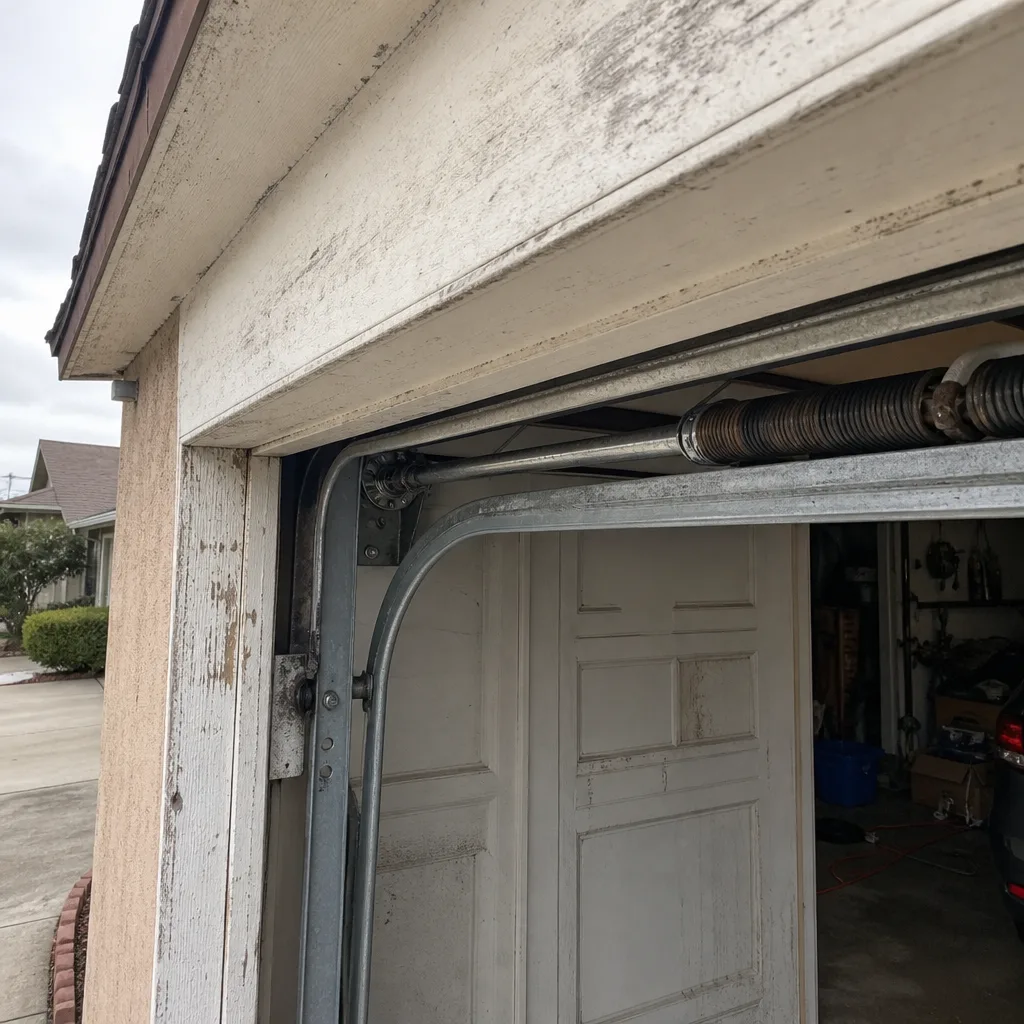 Before
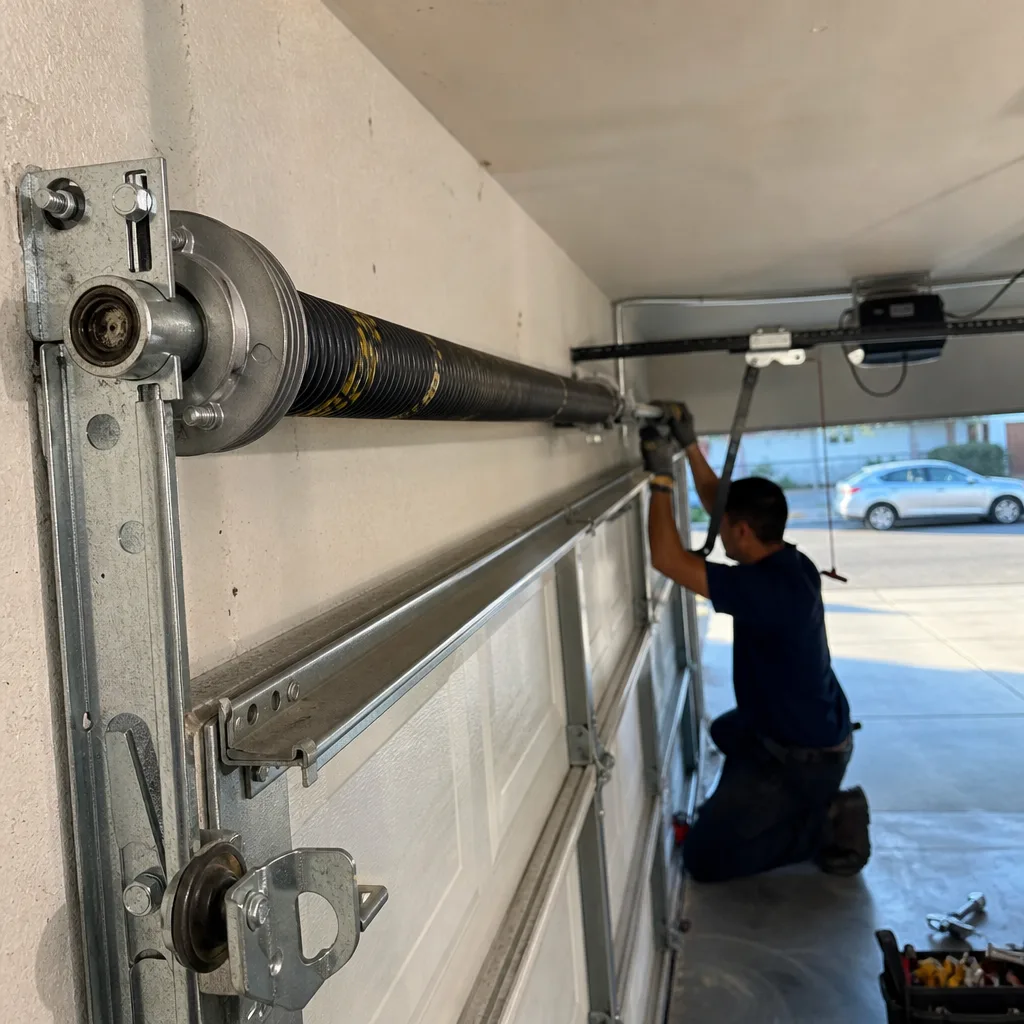 After
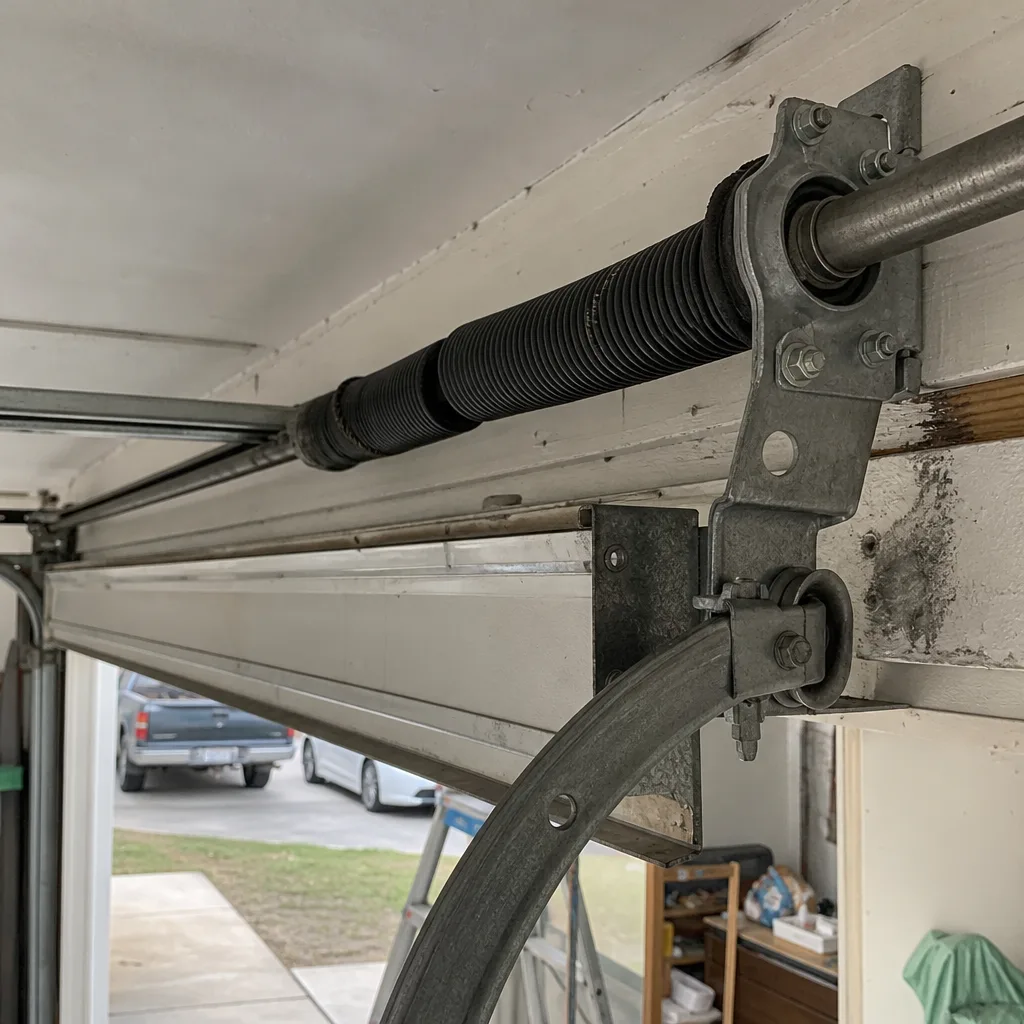 Before
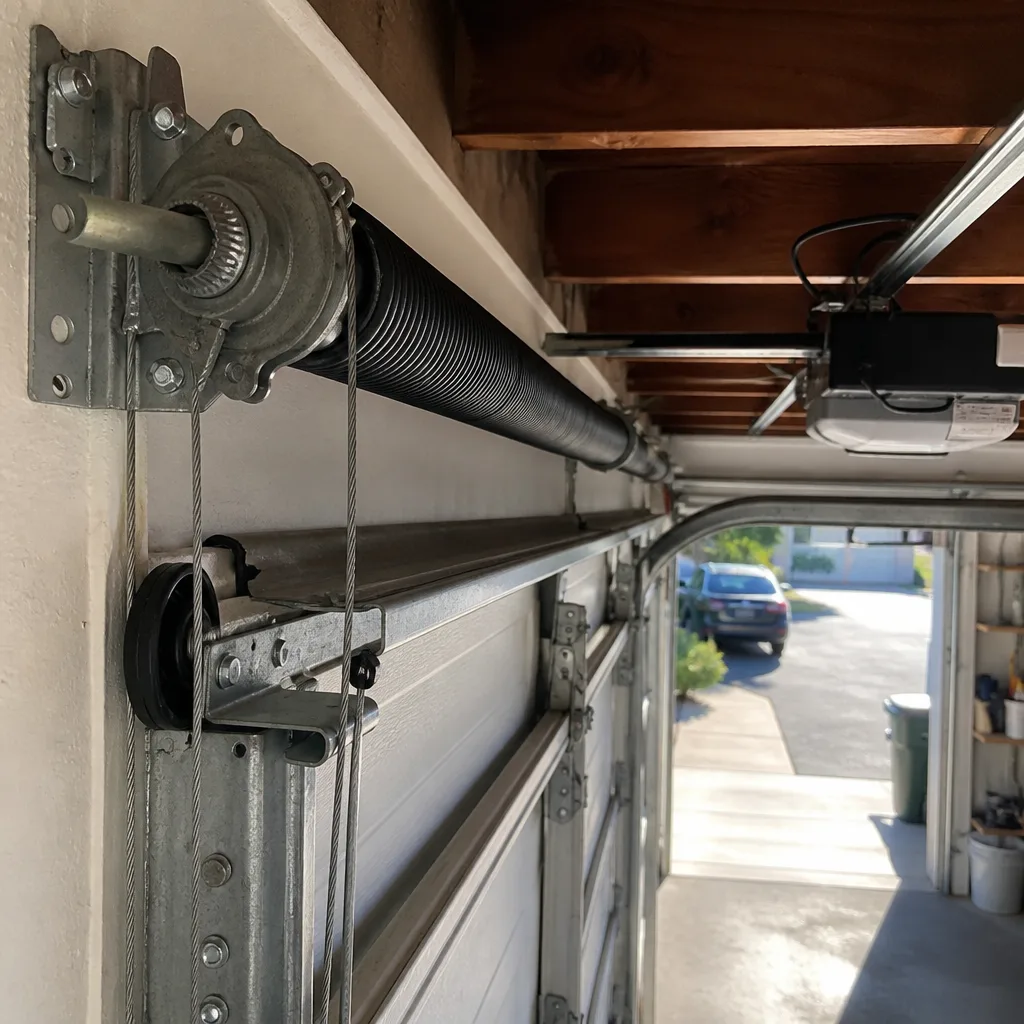 After
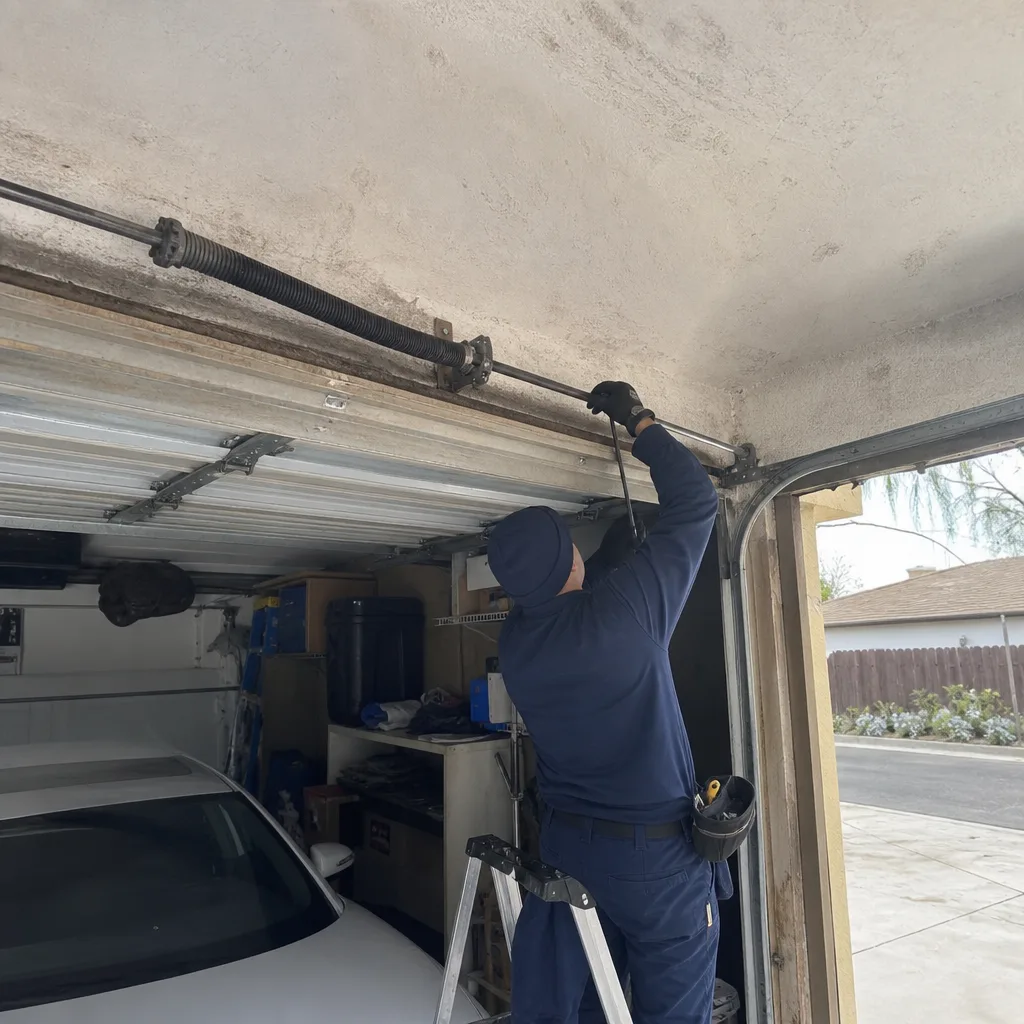 Before
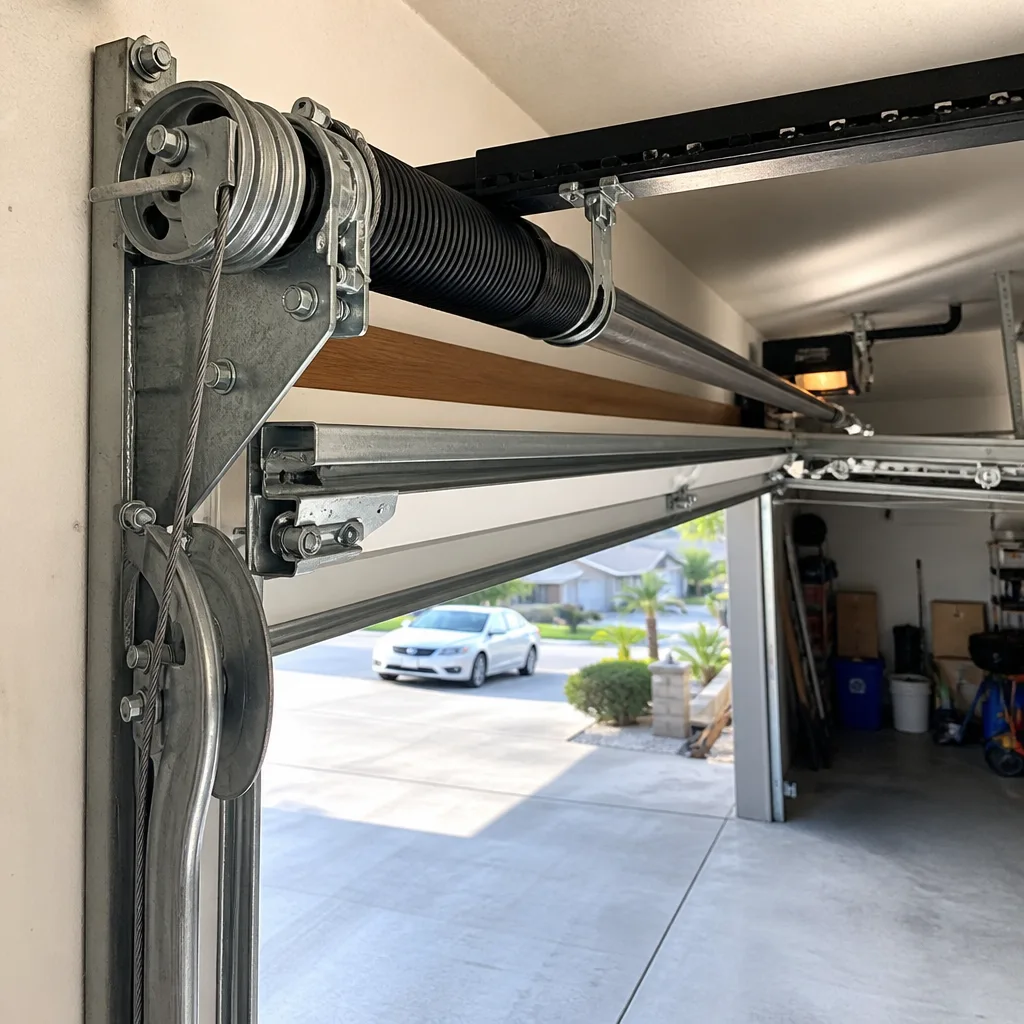 After
When to Call a Professional
Some garage door problems are DIY-friendly: a power outage with a healthy door, a routine balance check, a manual close-and-lock drill. Others are not. Call a professional when you have a snapped spring, an earthquake-damaged track, a door that won’t move under manual operation, or any situation where the door is stuck open and you can’t secure it safely. These are the moments where a generalist handyman is a risk: garage doors are specialized equipment, and the wrong repair makes an emergency worse. Santa Ana Garage Door Service offers free estimates in Santa Ana. Call (855) 341-7810 and describe what you’re seeing. We’ll tell you over the phone whether it’s an immediate call-out or something that can wait for a scheduled visit, and the price is quoted before any work begins.
If your door or opener is beyond repair, the same team handles Garage Door Installation in Santa Ana. We work on whatever brand is in your home, whether it’s a Raynor panel, a Wayne Dalton track system, or an Amarr door with a LiftMaster drive. There’s no upsell to a preferred manufacturer and no “we don’t work on that brand” runaround. If it’s a residential garage door, we’ve seen it, diagnosed it, and fixed it before.
Frequently Asked Questions
The first step is to check the photoelectric sensors near the bottom of the door tracks. If they’re blocked, misaligned, or dirty, the door will refuse to close as a safety precaution. Check for obstructions and wipe the sensor lenses. If the door still won’t close, disengage the opener using the red manual release cord and lower the door by hand, then secure it with locking pliers on the track. If the door feels heavy or won’t move, you have a spring or track problem, and that’s a professional call. Reach Santa Ana Garage Door Service at (855) 341-7810 for same-day service in most cases.
Yes, but only if the door’s springs are healthy. Pull the red release cord with the door closed, then operate the door manually. A balanced door lifts and lowers with reasonable effort and stays where you put it. If the door drops or won’t lift, the springs are compromised and you should not force it. When power returns, re-engage the opener by pulling the release cord toward the motor unit until you hear a click, then test with the wall button.
Look for visible gaps between the horizontal tracks and their mounting brackets, any lean or twist in the vertical tracks, and any unusual noise during operation. After an earthquake in the Santa Ana area, we recommend a professional inspection before resuming normal use, even if the door seems fine. For details on local requirements, see Garage Door Permits, Codes & Inspections in CA: What You Need to Know. Seismic damage is often progressive: a track that shifted half an inch today becomes a full derailment a week later. The inspection covers the tracks, springs, hinges, and opener carriage, and catches problems while they’re still repairable rather than replaced.
Yes. A snapped torsion spring means the door’s full weight is un-countered, and if the door is open, it can fall. If the door is closed, the opener may burn itself out trying to lift an unbalanced panel. Either way, you should stop using the door immediately, secure it in place, and call a specialist. This is not a repair to attempt yourself. The spring is under enough tension to cause serious injury or death if handled incorrectly, and the wrong replacement spring will damage the rest of the system.
We service openers from LiftMaster, Chamberlain, Genie, and Craftsman, and we work on doors from Clopay, Amarr, Wayne Dalton, and Raynor. That covers virtually every residential system installed in Santa Ana homes, from older chain-drive Craftsman units to the newest belt-drive LiftMaster models with smart features. Whatever brand is on your door, we already know it. If your opener is beyond repair, our Garage Door Opener Repair in Santa Ana service includes honest recommendations about whether repair or replacement makes more sense for your specific unit.
The cost depends on the specific problem, not on a flat “emergency fee” or a brand-based markup. A snapped spring replacement, for example, is priced based on the spring type and door weight, and the quote is the same whether it’s 2pm or 10pm. We quote the full price before any work begins, and the invoice matches the quote. Call (855) 341-7810 and describe the problem. We’ll give you an honest estimate over the phone and tell you whether a same-day visit is necessary.
The Bottom Line
Garage door emergencies in Santa Ana follow a pattern: wind events cause power outages, seismic activity shifts tracks and brackets, and springs eventually fail under years of cyclical loading. What separates a minor inconvenience from a genuine crisis is knowing the correct sequence of actions and having the judgment to know when a problem is beyond manual intervention. Learn the manual release procedure before you need it. Test it twice a year. Keep a set of locking pliers in the garage. And when the spring snaps or the door won’t move, don’t guess. Call a specialist who already knows your equipment: (855) 341-7810. Whether it’s a Clopay panel, a Raynor track, a Wayne Dalton spring system, or an opener from LiftMaster, Chamberlain, Genie, or Craftsman, our technicians at Santa Ana Garage Door Service home have worked on it before and know exactly what it needs.
Written by the team at Santa Ana Garage Door Service, serving Santa Ana since 2011. Browse more guides & resources on our blog.