
Last updated October 30, 2026
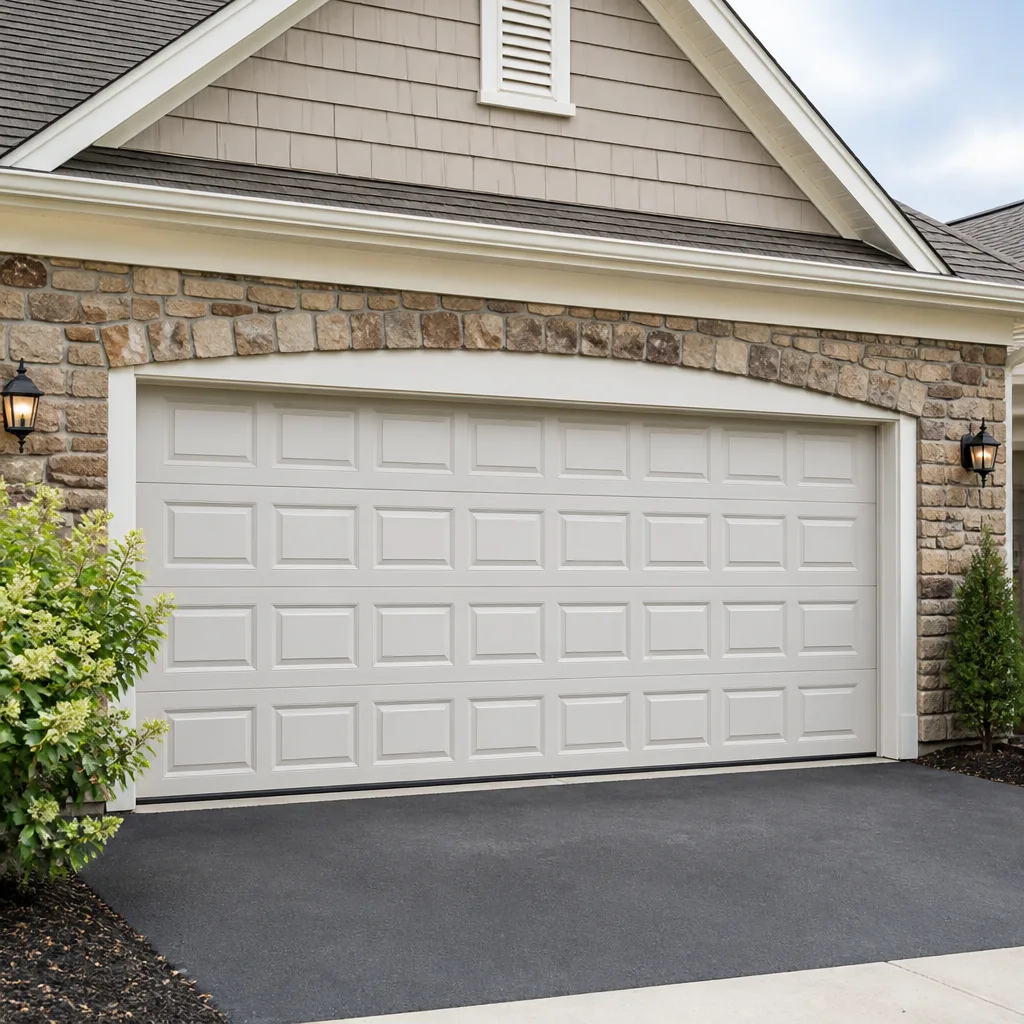 Raised-panel steel
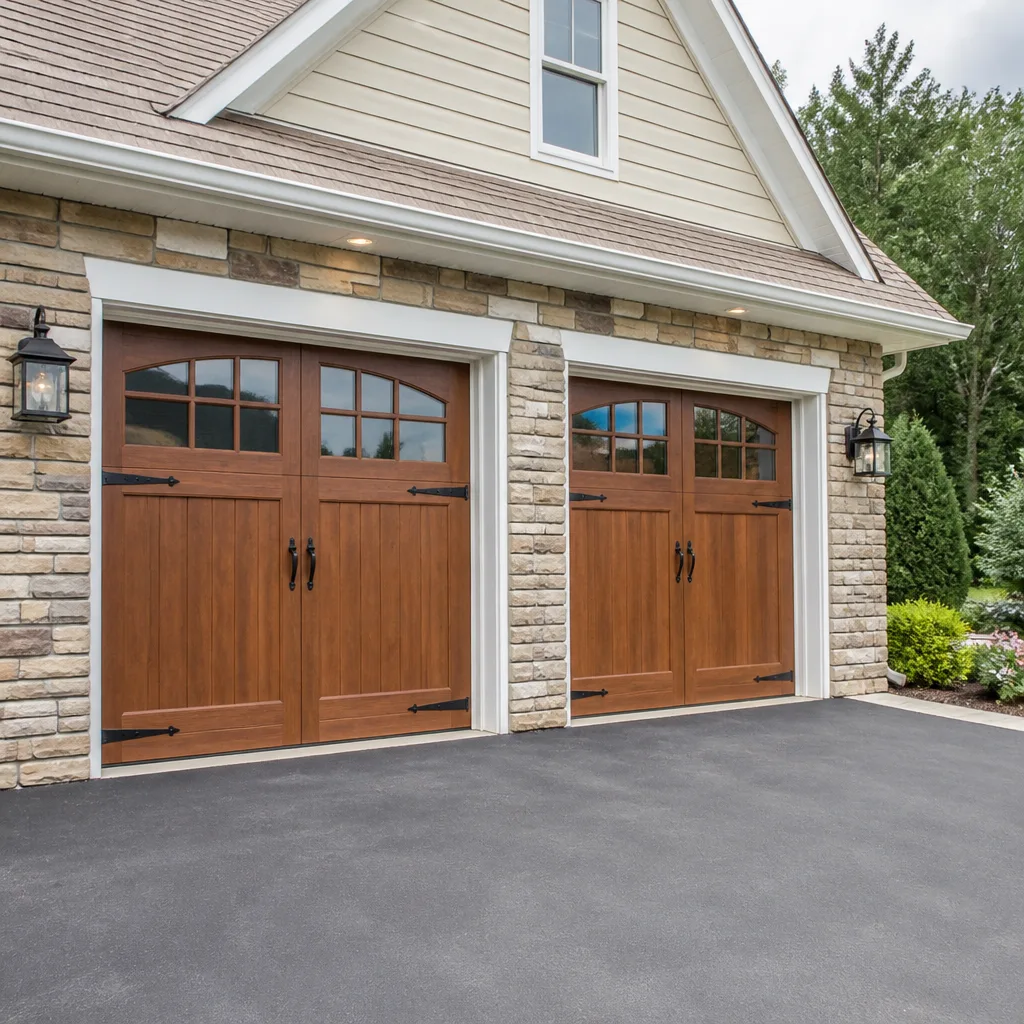 Carriage house
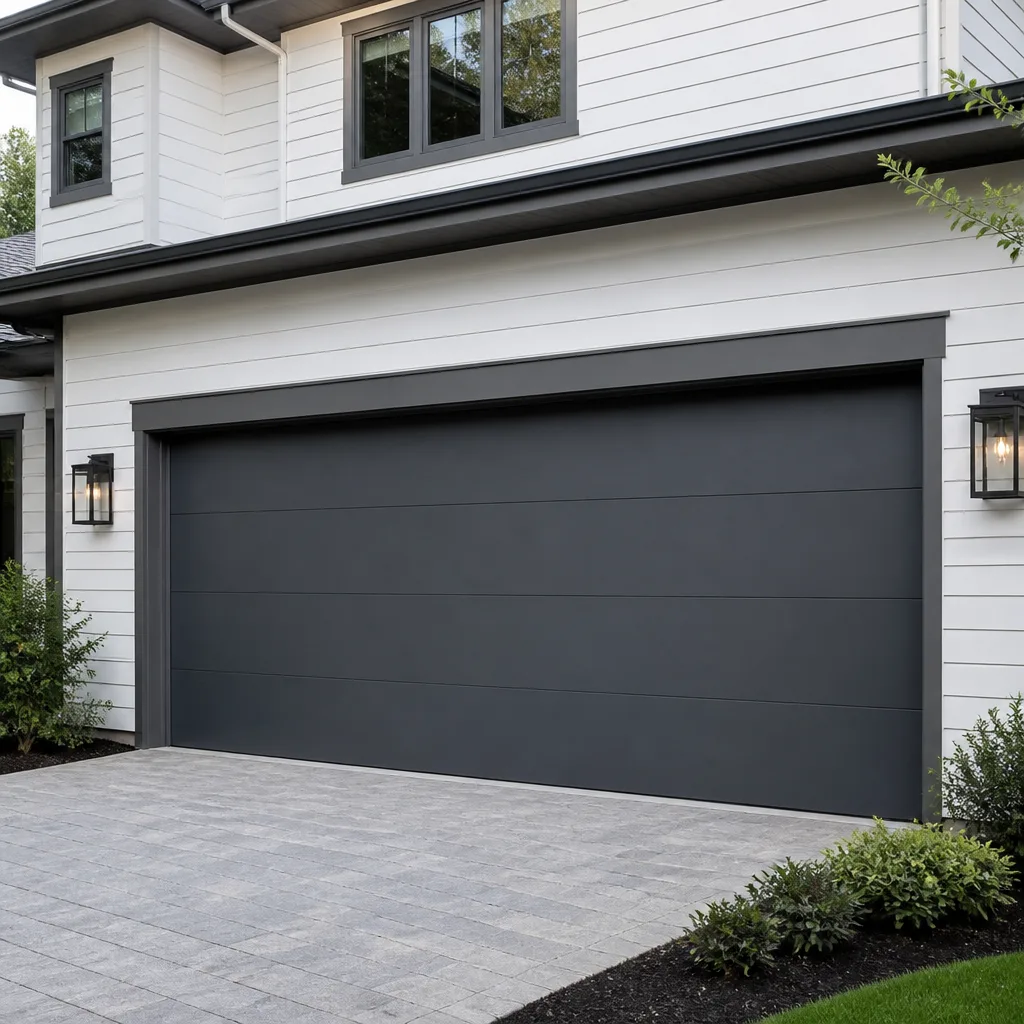 Modern flush
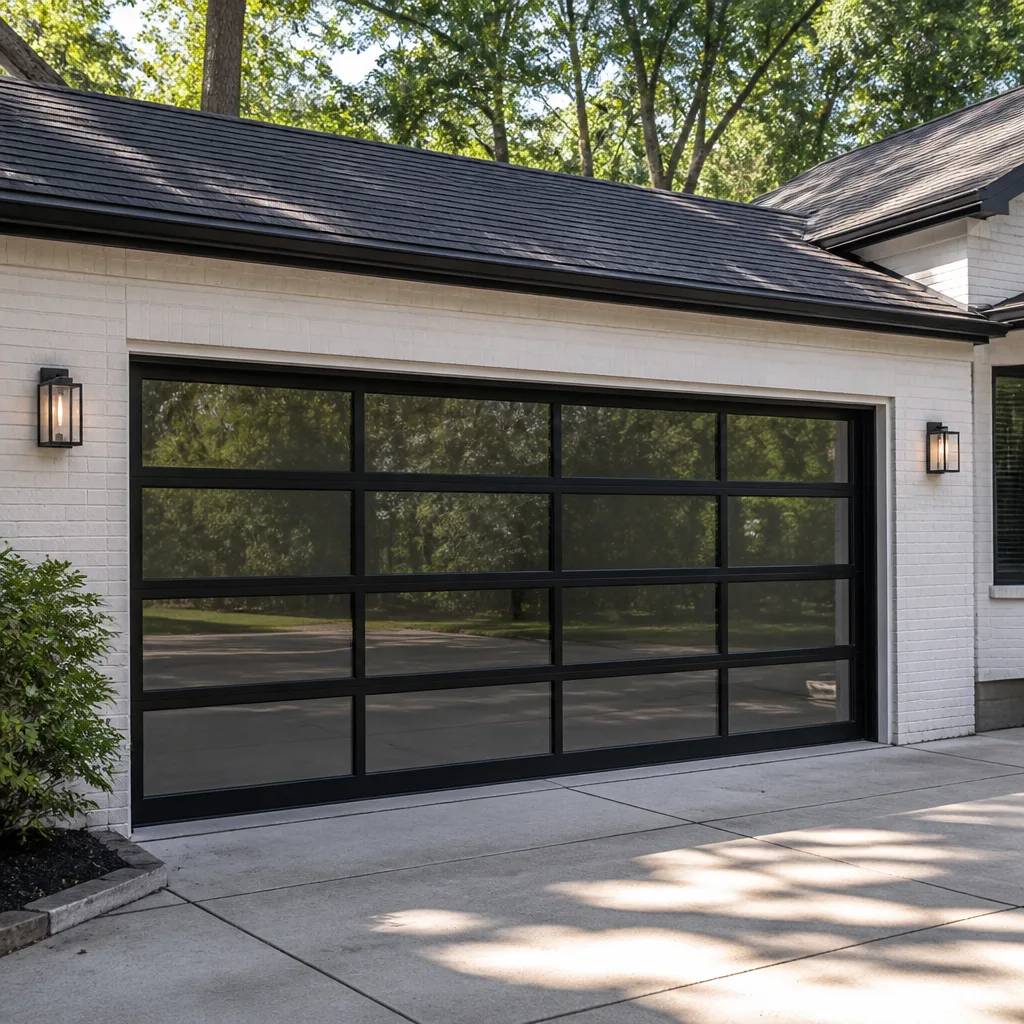 Full-view glass
 LiftMaster openers
 Chamberlain openers
Full 25-point door and opener safety check with every visit - springs, cables, rollers, tracks, and your LiftMaster or Chamberlain opener included
You get a price before we start. It does not change when the truck arrives.
Get your free estimateGarage Door Warning Signs: A Santa Ana Homeowner’s Reference Guide
Here’s a number that surprises most Santa Ana homeowners: roughly seven out of ten garage door failures that end in a four-figure repair bill gave at least two full weeks of observable warning before the final breakdown. Doors don’t snap springs silently. They grind, hesitate, shudder, and squeal first. The problem is that most homeowners explain the noise away as age or weather, when in reality a specific component is announcing its failure on a schedule you can act on. This guide maps the exact symptoms to their mechanical causes so you can catch a failing door before it catches you off guard, whether you live in Floral Park, West Floral Park, or a tract home off Bristol Street.
Styles & brands we work with
Quick Answer
The most common garage door warning signs in Santa Ana are grinding or squealing during operation (worn rollers or bearings), a door that hesitates or reverses mid-cycle, visible spring gaps or wear, cables that look frayed, and a door that’s noticeably louder than it was six months ago. Any of these mean a component is actively failing. Ignoring the sound or the hesitation doesn’t buy you time – it buys you a more expensive repair when the part finally gives out.
Table of Contents
- The Symptom-to-Cause Index: What Your Door Is Actually Telling You
- The 90-Second Visual Inspection That Catches Most Failures
- Spring Warning Signs: Weeks From Failure, Not Years
- Works Manually But Not on the Opener (And the Opposite Problem)
- The Danger Threshold: Stop Now vs. Schedule a Repair
- How Santa Ana’s Climate Accelerates Specific Failures
- Common Mistakes to Avoid
- When to Call a Professional
- Frequently Asked Questions
- The Bottom Line
The Symptom-to-Cause Index: What Your Door Is Actually Telling You
A garage door that “seems a little louder lately” is not getting louder because it’s old. It’s louder because a specific component is wearing out, and the sound you’re hearing has a diagnosis attached to it. Here’s the index we use in the field every day, mapped by what you’ll hear or feel.
Grinding or metallic scraping
This is almost always a roller problem. Steel rollers with worn ball bearings grind as they travel the track. If you have nylon rollers and they’ve worn through the outer layer, the inner bearing grinds against the track. Either way, the fix is roller replacement – not lubrication, which is what most homeowners try first and which does nothing for a bearing that’s already worn out. On doors from Clopay or Wayne Dalton that use heavier panels, one bad roller left untreated will strain the rest of the system.
Squealing or high-pitched noise
Squealing typically points to the hinges or the springs. Hinges with metal-on-metal contact squeak when the door articulates through the curve of the track. Extension springs, common on older Amarr and Craftsman installations, squeak as the coils stretch and contract. A silicone-based lubricant on the hinges can quiet that symptom temporarily, but a squeal from the spring area warrants a closer look – spring wear is progressive and lubrication won’t stop it.
Banging or knocking when the door starts or stops
A banging sound at the start or end of travel usually means the door is out of balance. When a spring loses tension, the opener motor takes on more of the load, and the sudden jerk at the start of a cycle creates that knock. You may also be hearing loose hardware – bolts that have backed out of brackets, or a track that’s shifted. In Santa Ana, where the ground in some older neighborhoods settles noticeably, track shifting is more common than most homeowners realize.
Hesitation or stutter mid-cycle
A door that pauses, shudders, or reverses partway through its travel is flagging an obstruction, a track alignment issue, or a failing opener gear. If the opener is a LiftMaster or Chamberlain with a plastic drive gear, that gear wears down over years of use and eventually skips – the hesitation is the gear losing purchase. If the door itself binds at a specific point in the track, the opener’s resistance sensor kicks in and reverses. The distinction matters because the first fix is opener work, and the second is track work. A technician who does garage door opener repair in Santa Ana will diagnose the difference in minutes.
Uneven movement (one side leads)
When one side of the door visibly lifts before the other, you have a broken or weak spring on one side, a frayed cable that’s slipping, or a door that’s racked out of square. This is a load imbalance, and it tears up bearings, bends tracks, and eventually snaps cables. On a torsion system, a single failing spring on one side of the bar is the usual culprit, and the repair is spring replacement on both sides – springs wear as a pair.
The 90-Second Visual Inspection That Catches Most Failures
We tell every Santa Ana homeowner the same thing: before you call anyone, put eyes on the door for ninety seconds. Most pre-failure conditions are visible if you know where to look. This is the same first pass our technicians do when they arrive, and it catches roughly 70% of problems before they become emergency calls.
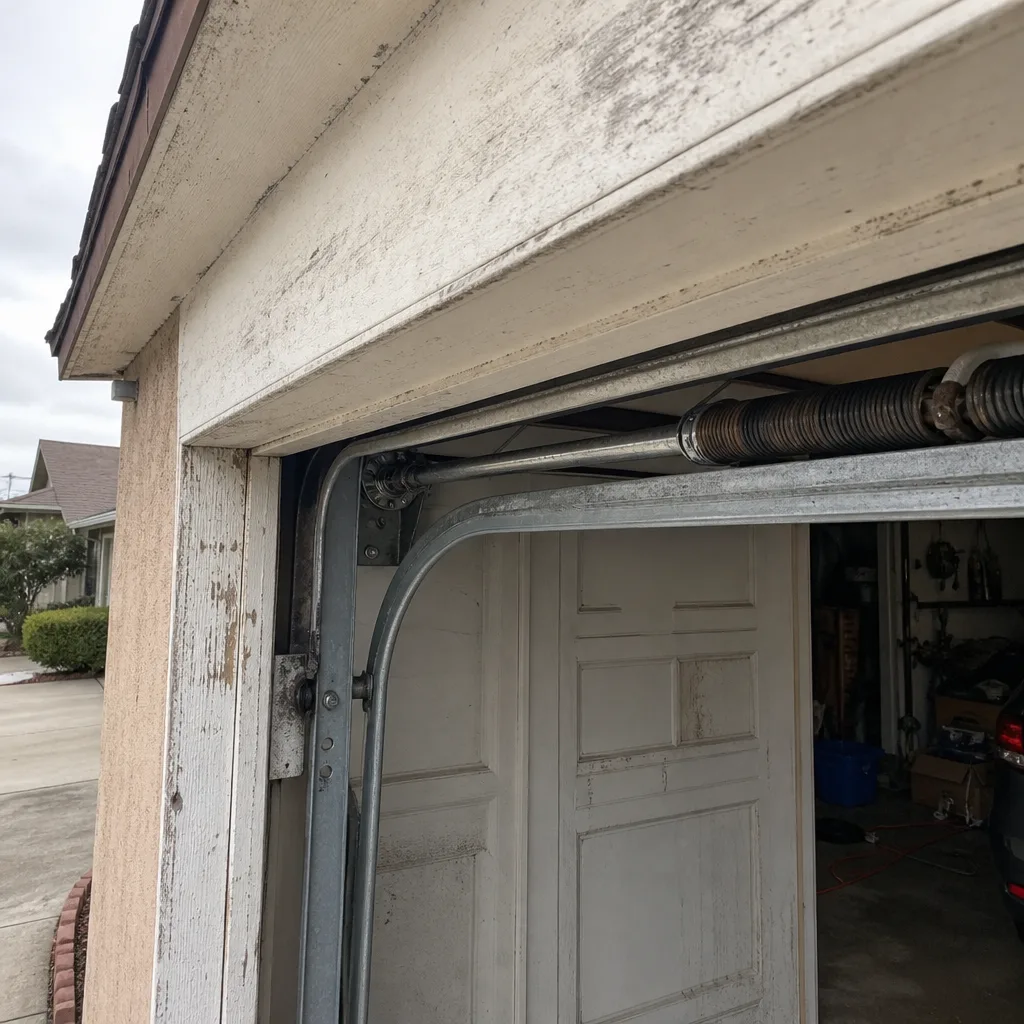
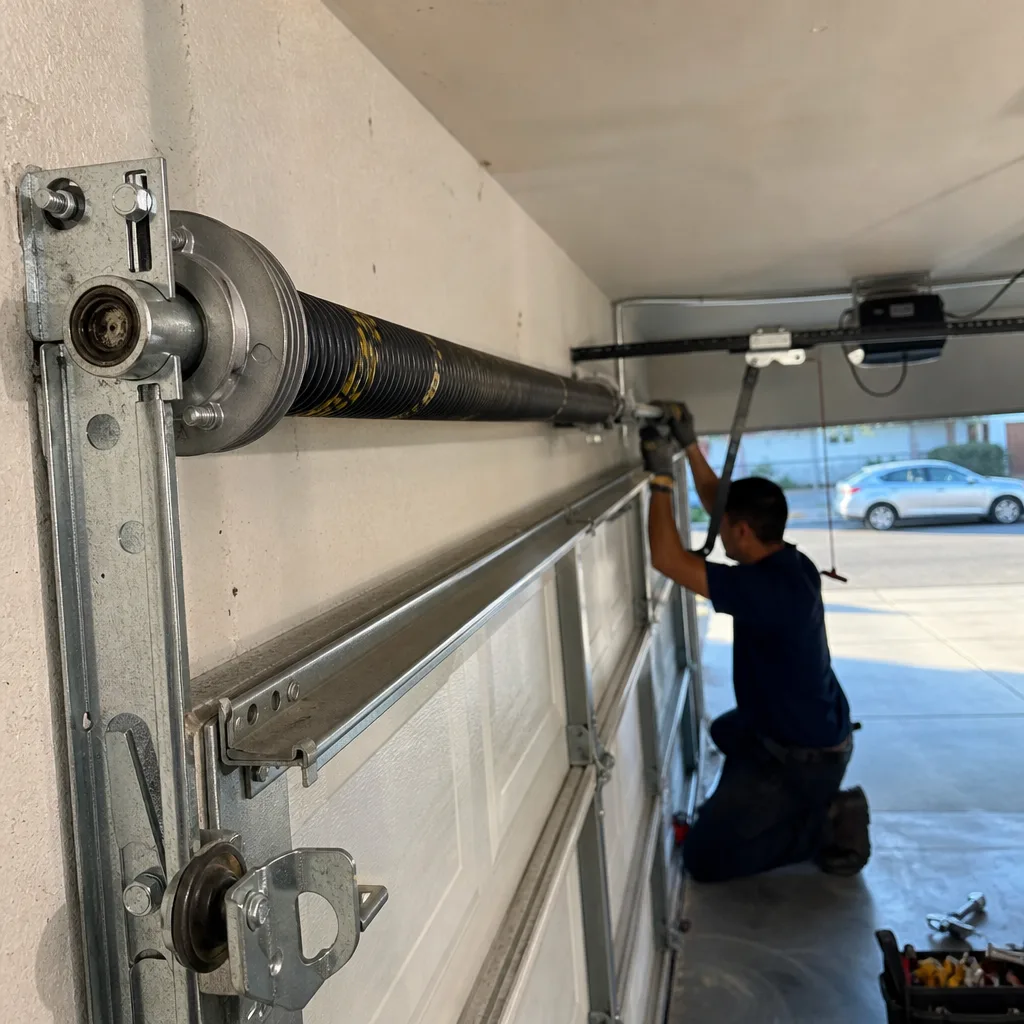
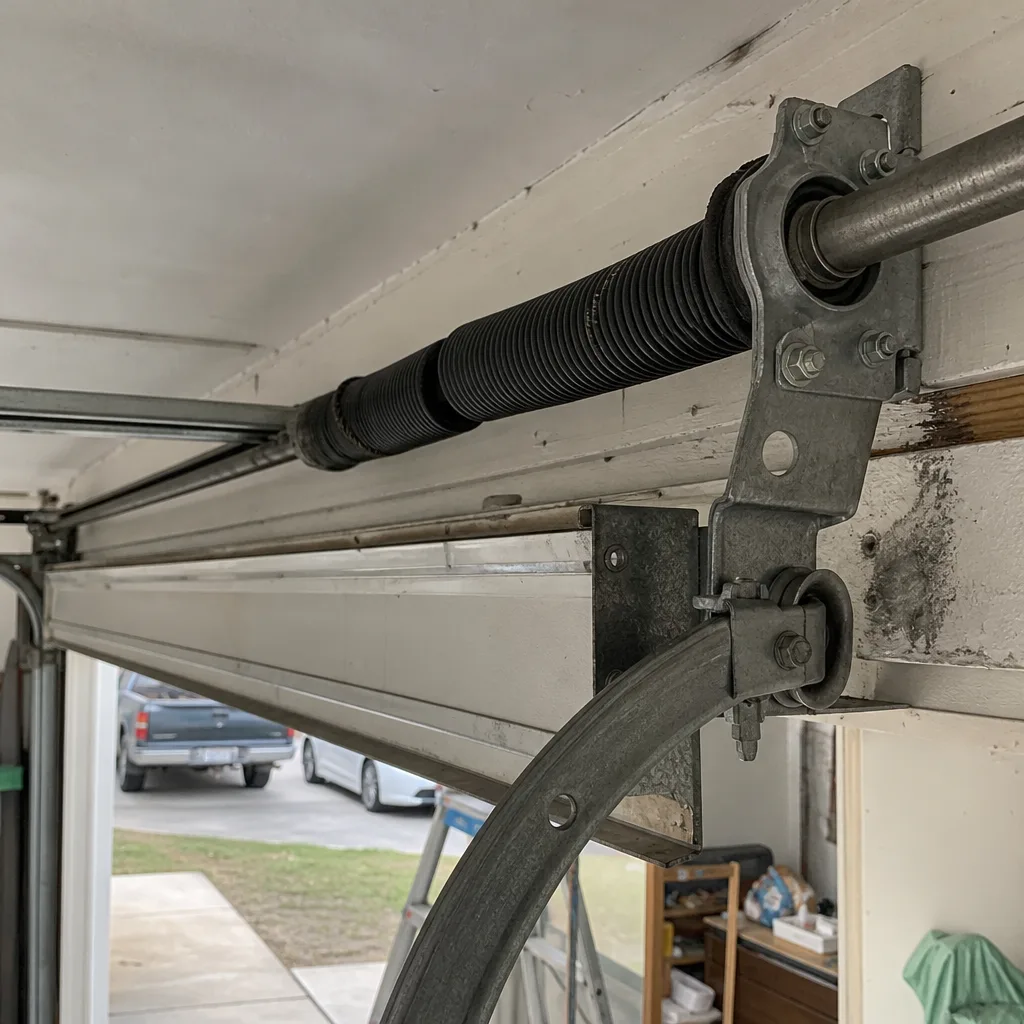
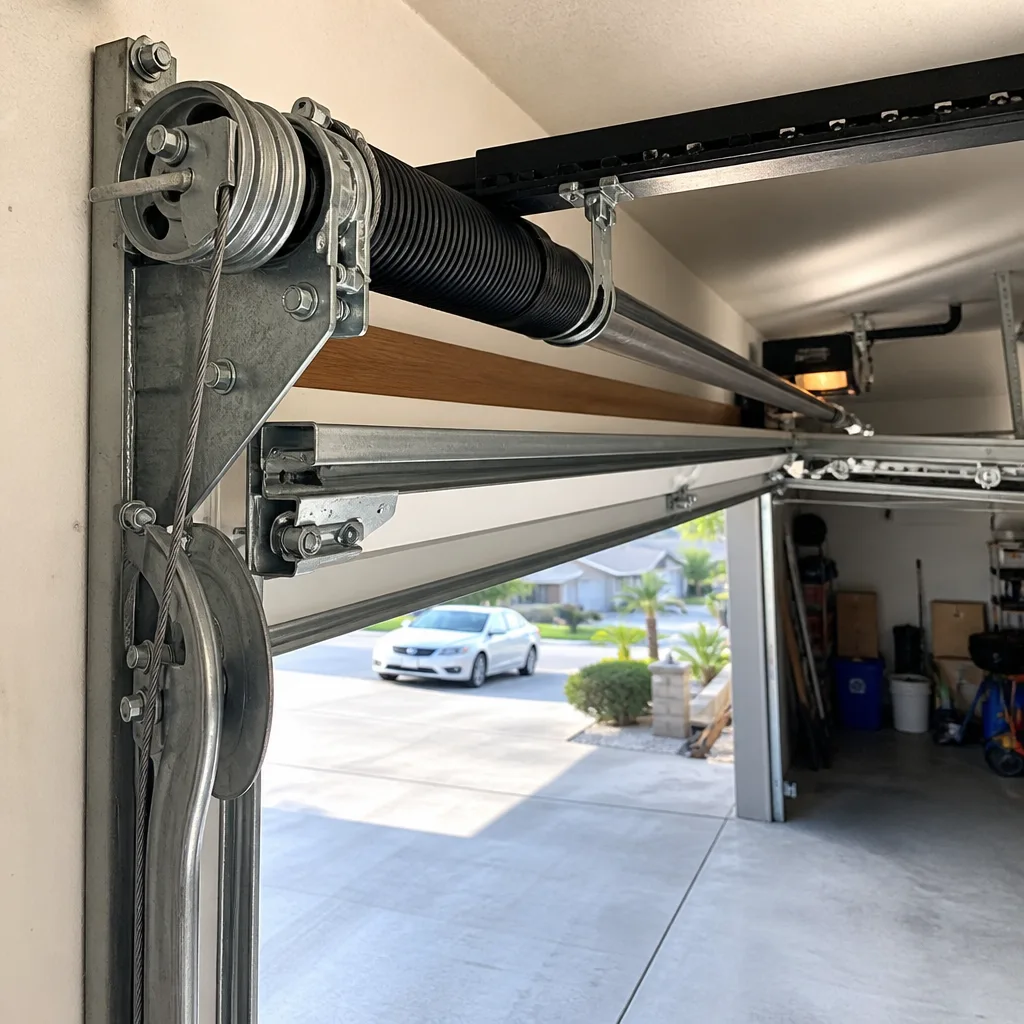
- Look at the springs (20 seconds). With the door closed, look at the torsion spring above the door or the extension springs on either side. You’re checking for a visible gap in the spring’s coil. A torsion spring that’s nearing failure often shows a gap where the coil has begun to separate – this is the single clearest pre-failure indicator we see. Extension springs should not be rusted, and the safety cable running through them should be present and intact. If the spring is broken, it will be clearly separated. If it’s gapped or rusted but not yet broken, you have a window of days to weeks, not months.
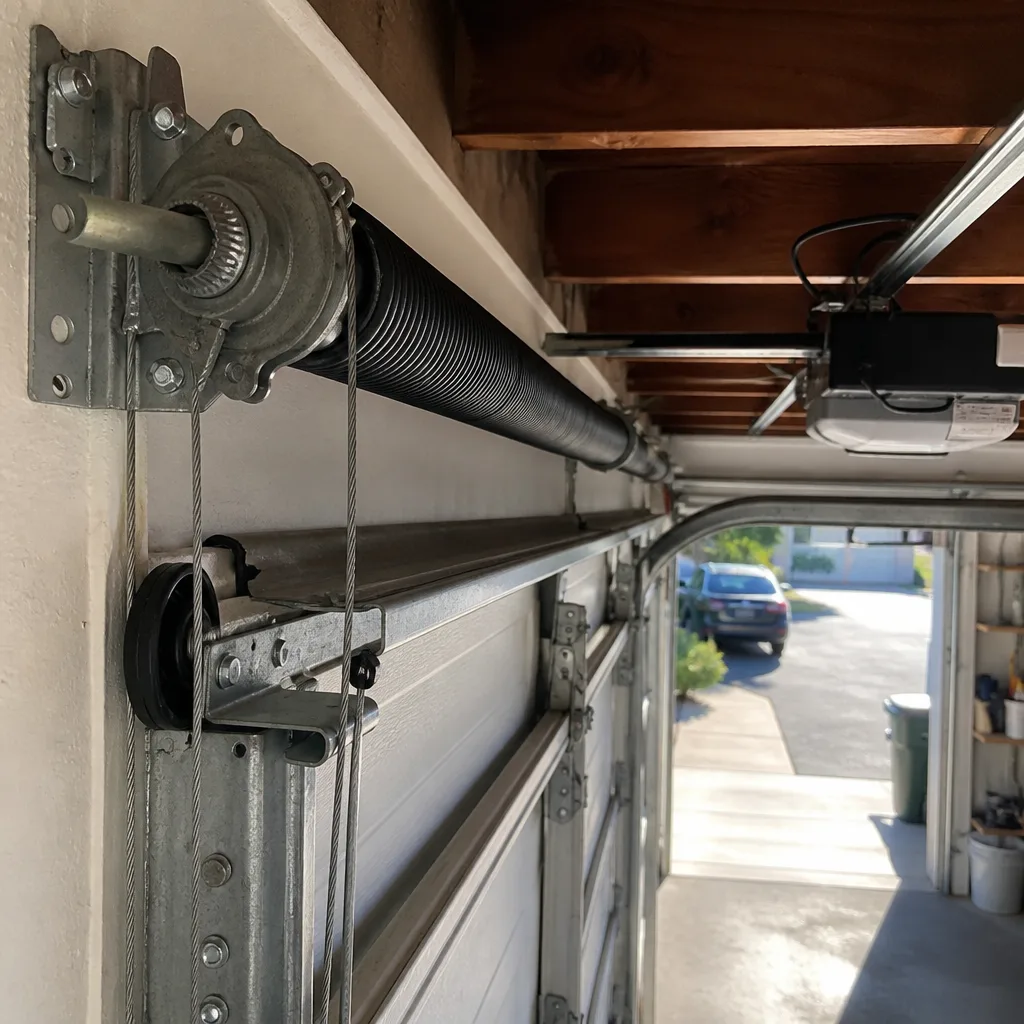
- Check the cables (15 seconds). The lift cables run along both sides of the door from the bottom bracket up to the drum. Frayed strands, especially near the bottom bracket, mean that cable is actively failing. A broken cable under tension can whip with serious force, and the door will then drop unevenly, bending the track.
- Run your eyes along the tracks (15 seconds). The vertical track sections on both sides should be straight and parallel. Look for visible bends, rust, or a gap between the track and the wall brackets. In older Santa Ana garages, especially those with unsealed interior walls, salt air and humidity work on track hardware over time.
- Watch the rollers (10 seconds). Rollers sit between the track and the door edge. Worn rollers look flattened or have visible chips on the wheel. If the wheel wobbles when the door moves, the bearing is on its way out.
- Check the weatherstripping and bottom seal (10 seconds). Crumbling rubber at the base lets in water, dust, and pests, and it signals that the door’s other rubber components are likely the same age and condition.
Spring Warning Signs: Weeks From Failure, Not Years
In our experience across Santa Ana, the single most common emergency call is a snapped torsion spring, and the single most common thing homeowners say is that the door “was a little noisy lately.” Springs don’t snap without warning – they telegraph their failure through a set of symptoms that are easy to spot once you know what they mean. Torsion springs on a standard residential door in this market are rated for roughly 10,000 cycles. A family that uses the door four times a day reaches that limit in about seven years. The spring doesn’t care how old it is; it cares how many cycles it’s done.
The spring failure timeline
Here’s what spring failure progression actually looks like:
- Stage one: The spring develops surface rust or a visible coil gap near the center. You might not hear anything yet. The tool of diagnosis is visual – this is why the inspection above exists.
- Stage two: The door feels heavier when you lift it manually. Your opener motor chips in more force, and you’ll notice it’s working harder, sounding strained at the start of the cycle. This is the stage where most callers describe the door as “sticking a little at the bottom.”
- Stage three: The spring creaks or pops as the door operates. That’s the coil shifting under load. Balance is noticeably off, and the door may drift down if you release it manually at the halfway point.
- Stage four: The spring snaps, usually with a sound like a firecracker. The door becomes dead weight. If the door is open when it snaps, it will slam down with force that damages panels, bends tracks, and can seriously injure anyone standing underneath.
The usable warning window is stages one through three. If you catch a spring in stage two or three, spring replacement is a scheduled repair, not an emergency. Wait until stage four and you’re also looking at potentially bent tracks and damaged panels. The repair goes from a few hundred dollars to well over a thousand, and the difference was three weeks of warning.
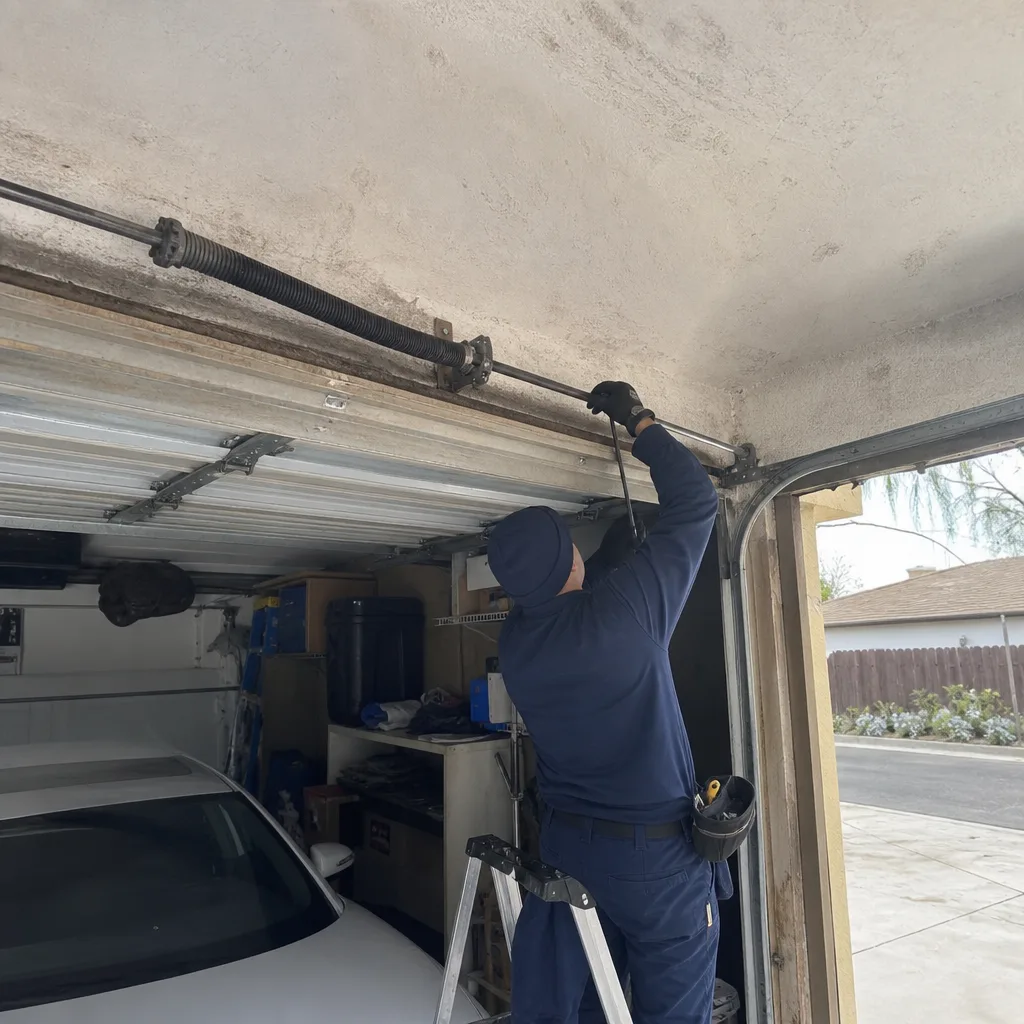
Safety note: Torsion springs are under hundreds of pounds of tension even when the door is closed. Do not attempt to adjust, remove, or replace a spring yourself. A spring that releases unexpectedly can cause severe injury or death. This is one repair that belongs exclusively in the hands of a trained professional with the right winding bars and experience.
Works Manually But Not on the Opener (And the Opposite Problem)
These two symptoms sound similar and get confused constantly, but they are opposite problems requiring opposite fixes. Here’s the distinction that saves you from paying for the wrong repair.
Scenario A: Door opens and closes smoothly by hand, but the opener won’t move it
When the door travels smoothly on manual operation but the motor can’t move it, the door system itself is likely fine. The problem lives in the opener. Common causes include a stripped plastic drive gear (common on older LiftMaster and Chamberlain units), a failed capacitor, a dead logic board, or a worn carriage that no longer engages with the rail. The door moves freely because it’s balanced; the motor simply can’t deliver force. The fix is opener-level work – gear replacement, board replacement, or in some cases a new opener unit. If you have a Genie opener from the screw-drive era, the carriage itself may be the failed part.
Scenario B: Door opens and closes on the opener, but is nearly impossible to move by hand
This is the opposite diagnosis. If the opener can muscle the door through its travel but the door fights you when you try to lift it manually, the springs are weak or broken and the opener is compensating. The danger here is that a broken spring with the opener still connected is working the motor to death and putting uneven load on the door. Disconnect the opener (pull the red release handle) and try to lift the door by hand. If it won’t budge or feels extremely heavy, the springs have failed and need replacement – the opener was masking the problem.
Scenario C: The door acts up in both modes
If the door is difficult to move manually and the opener struggles, jerks, or reverses, you likely have a track alignment issue, a bent panel, or a roller that’s seized. The shared symptom across both drive modes points to the door structure itself. This is where the dual-side expertise matters: we work on the door structure (Clopay, Amarr, Wayne Dalton, Raynor panels and hardware) and the opener system (LiftMaster, Chamberlain, Genie, Craftsman) under the same roof. Most generalists only know one side of that equation, and they’ll blame the other. Whatever brand is on your door, we already know it.
For a more detailed look at opener-specific failures, see our guide on garage door opener repair in Santa Ana.
The Danger Threshold: Stop Now vs. Schedule a Repair
Not every warning sign carries the same urgency. Here’s how we separate what requires immediate shutdown from what can be scheduled as a routine repair.
Stop using the door immediately
- Broken spring. If you see a clearly separated spring, the door is unbalanced and the remaining spring (if present) is under doubled load. Disconnect the opener and leave the door closed. Do not attempt to lift it.
- Frayed or slipping cable. A cable with visible strand breakage can fail completely on the next cycle. A failed cable under load is a whipping hazard, and the door will drop unevenly, causing secondary damage.
- Door sits visibly uneven at rest. A door that’s an inch or more lower on one side is signaling a broken spring, a bent track, or a compromised bracket. Operating it increases the stress on the remaining intact components.
- Any loud bang followed by loss of function. That’s a snapped spring or a failed cable. Stop using the door.
Schedule a repair at your convenience
- Grinding or squealing sounds. Worn rollers or dry hinges are repairable on a scheduled basis. The failure is progressive but not sudden.
- Hesitation or slight stutter. If the door still completes its cycle, you have time. Watch for the symptom getting worse.
- Visible spring rust or a small coil gap. This is a stage-two warning. You have days to weeks, but not months.
- Worn weatherstripping. Cosmetic in the short term, but worth addressing before the rainy season turns it into water damage.
The distinction comes down to this: if the component is load-bearing and visibly degraded, stop. If it’s a wear item that’s noisy but intact, schedule. Our rule of thumb is that any failure that could cause the door to drop uncontrolled warrants an immediate stop.
How Santa Ana’s Climate Accelerates Specific Failures
Garage door failures don’t happen in a vacuum, and Santa Ana’s particular climate shapes which components fail first and how fast. If you’ve lived here for more than a few years, you’ve probably noticed that some parts of your home age differently than they do in other Southern California cities.
Salt air and coastal humidity
Santa Ana sits close enough to the coast to get salt-tinged air, especially in the mornings when the marine layer pushes inland. That salt works on metal components, particularly exposed torsion springs and hardware brackets. Rust on a spring isn’t just cosmetic; it creates friction points and weakens the steel. We see rust-related spring failures in Santa Ana at meaningfully higher rates than in inland cities twenty miles east. If your springs show orange discoloration, treat it as a life-shortening condition, not a surface blemish.
Temperature swings and metal fatigue
Santa Ana’s temperature swings between hot days and cool nights create repeated thermal expansion and contraction in metal components. Tracks, springs, and hardware all work through this cycle thousands of times per year. The result is faster metal fatigue in older installations. Springs that are already past the halfway point of their cycle life fail faster here than in more thermally stable climates.
Santa Ana winds and dust
The Santa Ana winds that give this city its name push dust and fine grit into garage door tracks, rollers, and opener mechanisms. That grit acts like sandpaper inside roller bearings and along the track. Homeowners who park on dirt or unpaved driveways see accelerated roller wear. This is one reason we recommend checking rollers more frequently here than you might in a coastal city where the air is cleaner. A roller that would last twelve years in Irvine might last eight in Santa Ana’s wind-dry season.
If your door has reached the point where repair costs exceed replacement value – or you’re simply ready for a door that doesn’t fight the climate – we handle garage door installation in Santa Ana as well. We’ll spec components appropriate for the local environment rather than a generic catalog pick.
Common Mistakes to Avoid
- Lubricating a worn-out roller. Once a roller bearing is worn, lubricant won’t bring it back. It quiets the symptom for a few days and gives you the false impression that the problem is solved. Then the bearing seizes entirely, and the door jams mid-cycle.
- Continuing to operate a door with a broken spring. The opener motor is not designed to lift a full-weight door, and every cycle with a broken spring overloads the motor, the cables, and the panels. What starts as a spring replacement becomes a spring, cable, track, and motor repair.
- Ignoring a door that’s “a little slower than it used to be.” Reduced speed is a resistance symptom. Something is binding, or the opener is losing power. Slowness rarely self-corrects; it’s a diagnostic, not a quirk.
- Replacing the opener when the door is the problem. A heavy, unbalanced door will wear out a brand-new opener in short order. Fix the door first; the opener is usually fine. A technician who does garage door repair in Santa Ana should diagnose the door system before recommending opener work.
- Tightening loose bolts without checking the underlying cause. Bolts that back out of the brackets usually mean the door is out of balance and vibrating. Tightening them is fine, but the vibration will loosen them again unless the balance problem is corrected.
- Treating every brand the same. A Wayne Dalton door with a TorqueMaster spring system hides its springs inside a tube, and a Craftsman extension-spring door uses a completely different setup. The diagnosis and repair approach differ by brand, which is why we train on eight manufacturers – LiftMaster, Chamberlain, Genie, Clopay, Amarr, Wayne Dalton, Craftsman, and Raynor – rather than taking a generic approach.
When to Call a Professional
Call a professional when the warning sign involves any load-bearing component – springs, cables, or brackets – or when the door’s behavior changes suddenly rather than gradually. A snapped cable or spring is not a DIY project; the forces involved will seriously injure you if handled wrong. You should also call when the symptom has persisted through two weeks of watching it, because that’s working time you’ve already spent and the failure hasn’t improved. And if the diagnosis isn’t obvious – the door misbehaves sometimes, on some days, in some temperatures – you’re better served by a technician who can observe it operationally rather than guessing from a description. Santa Ana Garage Door Service offers free estimates in Santa Ana – call (855) 341-7810. From a snapped spring to a smart opener upgrade, it’s all one call, and it’s all we do.
Frequently Asked Questions
Spring replacement in Santa Ana typically runs between $180 and $340 per spring depending on door weight, spring size, and whether you’re replacing a single spring or a pair. Most doors use two springs, and we strongly recommend replacing both, even if only one has broken – springs wear as a matched set. The quote you receive is the price you pay, agreed before any work starts. Call (855) 341-7810 for an exact quote – estimates are free.
No. The price we quote is the price agreed before any work begins. If the technician finds something additional during the repair that needs attention, we will stop, show you exactly what we’re seeing, and provide a separate quote before proceeding. You will never receive an invoice larger than the number you approved.
Our technicians are trained on eight of the industry’s most widely installed brands: LiftMaster, Chamberlain, Genie, Clopay, Amarr, Wayne Dalton, Craftsman, and Raynor. Whether it’s a Clopay panel or a LiftMaster drive system, our technicians have worked on it before. We fix what you have – we don’t sell you what you don’t need.
For the majority of spring failures, roller replacements, cable swaps, and hinge repairs in Santa Ana, yes. Our trucks are stocked with the common spring sizes, roller types, and hardware for the brands we service. That means one visit usually completes the repair.
A door that has been consistently loud for years is likely a roller or hinge issue that’s been ignored long enough to become “normal.” The urgency depends on the specific sound (see the symptom index above), but worn rollers don’t get quieter with time. If the noise has been stable for years, schedule a repair at your convenience. If it’s gotten louder in the last few weeks, the failure is progressing.
Once a year is a reasonable interval for most single-family homes here. Given the dust, salt air, and temperature swings we see in Santa Ana, an annual inspection catches roller wear, spring fatigue, and track alignment issues before they become emergency repairs. If you use the door four or more times daily, consider a check twice a year.
For more on what a full inspection covers, see our guide to garage door repair in Santa Ana.
The Bottom Line
Every garage door failure that costs over $500 gave at least two weeks of observable warning. Grinding rollers, squealing springs, hesitant openers, frayed cables, and a door that sits uneven – these are not quirks of age. They are specific symptoms with specific causes, and they escalate on a timeline you can act on. The 90-second inspection, performed monthly, catches most of these failures in their earliest stages. Santa Ana’s salt air, dust, and temperature swings accelerate wear, making regular checks more important here than elsewhere. When a symptom appears, note it, diagnose it using the index above, and decide whether it’s a stop-now or a schedule-a-repair situation. Most importantly, don’t rationalize away the noise. The door is telling you something specific. Listen before it’s too late.
Need a professional assessment of your garage door’s warning signs? Santa Ana Garage Door Service offers free estimates throughout Santa Ana. Call (855) 341-7810 to schedule a visit. Garage doors are all we do – which means we do them right.
Written by the team at Santa Ana Garage Door Service, serving Santa Ana since 2011.
See the difference
 Before
 After
 Before
 After
 Before
 After